

I went through the Board of Elections filings to answer a simple question: is the party becoming more efficient with money, or less?
There’s a link below to all of the fundraising filings used for this analysis so you can review the numbers directly.
https://drive.google.com/drive/folders/1LoTgMj6FG1Ze2W9bcdvoKJnjxT7QvpiA?usp=sharing
One note upfront. The 2025 data is incomplete. The Board of Elections does not currently have full filings posted, and I’ve requested those records directly. So 2025 should be treated as partial, not a full-year comparison.
With that said, here is the picture.

Income vs Spending
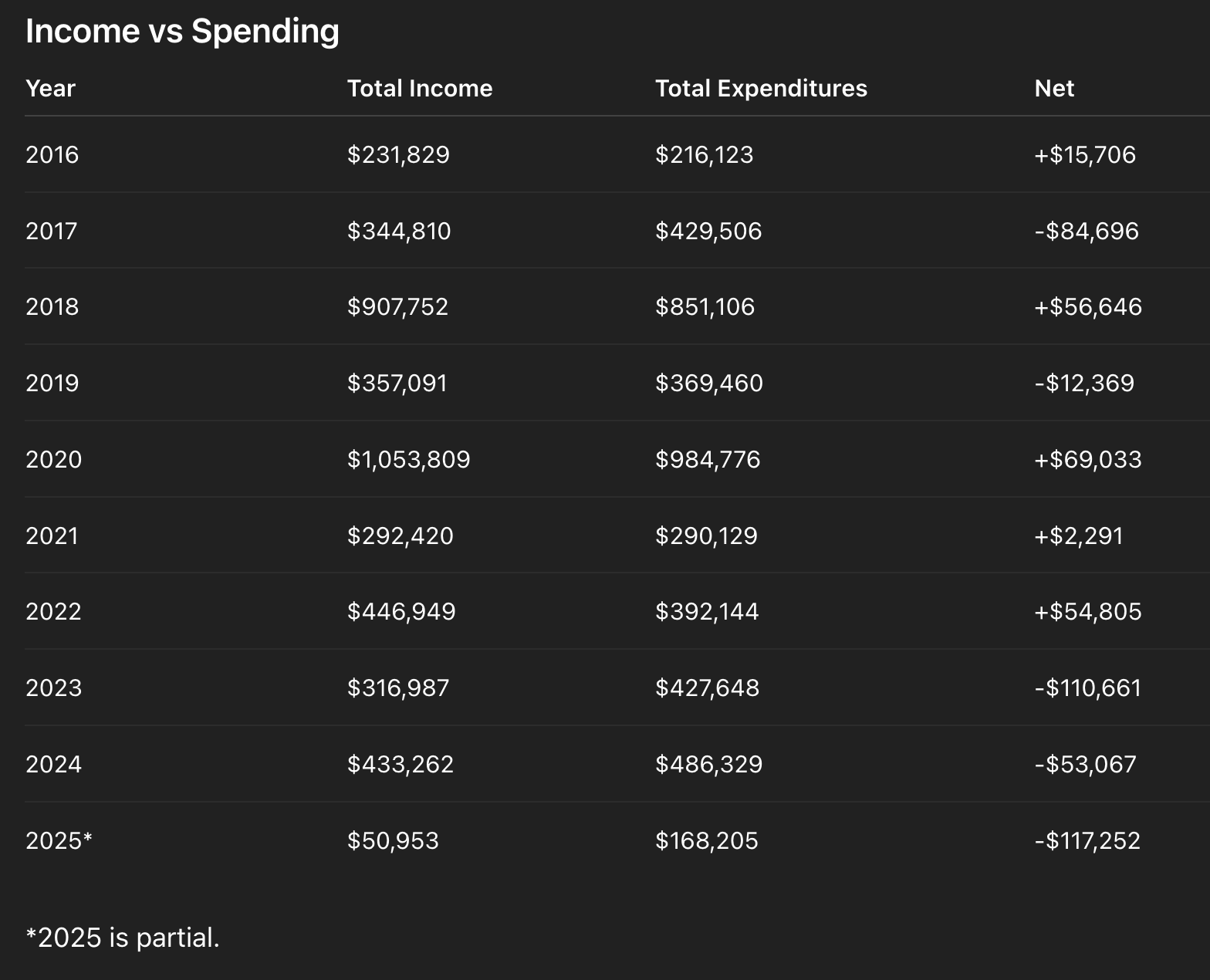
From 2016 through 2022, the party more or less broke even. Some deficits, some surpluses, but generally aligned.
Starting in 2023, that changed.
2023: -$110K
2024: -$53K
2025 (partial): -$117K
The Added Costs and ROI
Beginning in 2023, two new recurring expenses appear:
Party Chair: ~$80,000/year
Bellwether (fundraising consultant): ~$5,000/month (~$60,000/year)
Total: ~$140,000 annually
So the question is whether that spend is generating new revenue.
It isn’t.
Baseline income before 2023 (excluding peak election spikes) sits around the mid-$300K range. After adding ~$140K in new costs, income increases by roughly ~$40K.
That leaves a gap of about -$100K per year.
That is negative ROI.
Cost to Raise a Dollar
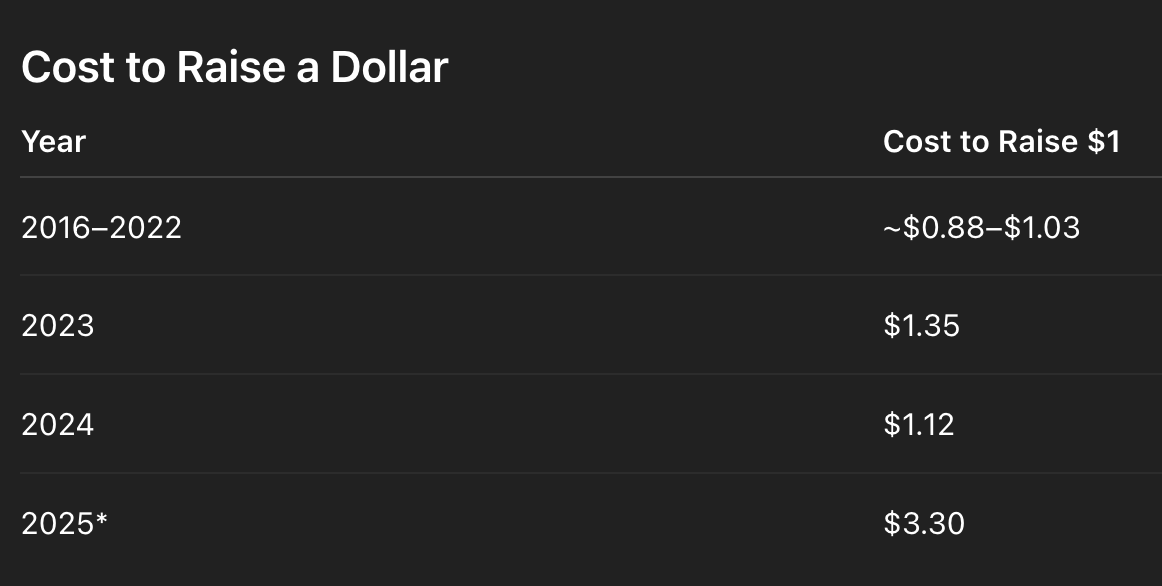
*Partial year, so interpret cautiously. I also reached out to the board of elections and I could not find the additional financial reports from the Cuyahoga County Democratic Party and I called the Board of elections to no response. I will update once I get it.
Before 2023, the party was roughly break-even on fundraising efficiency.
After 2023, it is consistently spending more than it raises to generate each dollar.
The Structural Issue
Most of the major contributions appear tied to the annual summer Democrat fundraising dinner.
That event existed before 2023. It did not require:
An $80K salary
A $5K/month consultant
Mark Szabo has stated that the chair’s salary was added in order to raise more money.
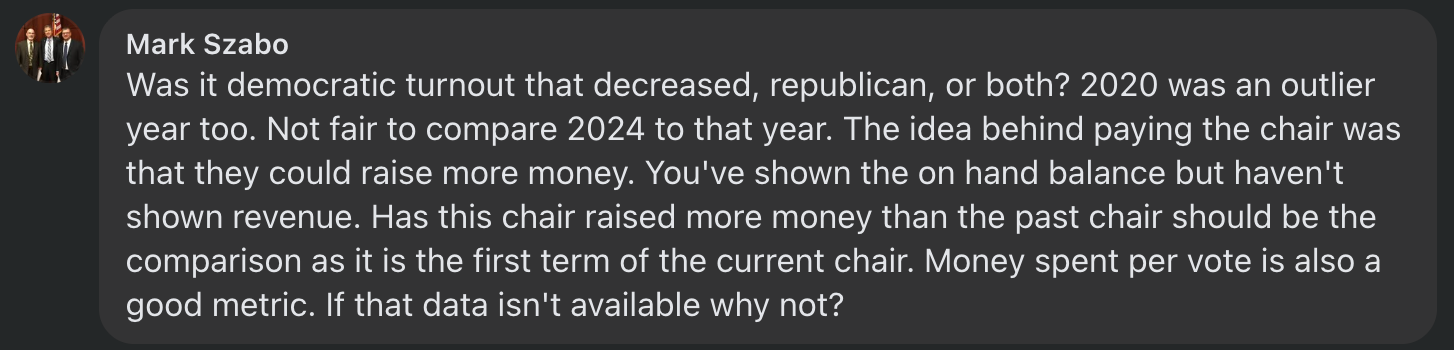
But based on the filings, that outcome is not showing up in the numbers.
So if the primary revenue driver hasn’t changed, and fixed costs increased by ~$140K, the conclusion is straightforward:
The new spending is not creating new revenue streams. It is layered on top of existing ones.
I will also look at cost per vote. But will be hard to determine if it is dem or rep. We do know that turnout is down in Cleveland over all. The suburbs have seen gains in local races.
The Bottom Line
Costs went up materially
Revenue did not keep pace
Efficiency declined
Jeff Crossman’s $107,000-plus donation to the Cuyahoga County Democratic Party has effectively kept it afloat.
Before that transfer, the party was sitting at roughly $50,000 in the bank. That is about two to three months of runway for an organization of this size. That is not stability.
That influx of money did not represent growth. It was a lifeline.
The party is hemorrhaging money, and fundraising is not keeping pace with increased costs, despite the addition of a paid chair and a fundraising operation that was expected to improve results.
So the question becomes unavoidable: are you getting the return on investment that you should be?
Because if the answer is no, then the next question is even more serious.
What happens when there is no Jeff Crossman transfer?
What happens when there is no Senate campaign feeding money down?
What happens when there is no reliance on the Ohio Democratic Party or a candidate’s excess funds or personal decisions to step in?
Right now, the financial model appears dependent on outside injections rather than internally generated stability or fiscal responsibility .
That is not sustainable.
The party needs to fundraise on its own. It needs a consistent, repeatable revenue model. And based on the numbers, it is obvious that the financial situation is not improving year over year.
So we should ask the honest question:
What happens if the Cuyahoga County Democratic Party runs out of money?