


Edit: Mike Gallagher made a website a couple weeks after this article came out. You can find his and Courtney’s websites linked by their names below.
This continues our analysis of races we are watching across Northeast Ohio. We are going to look at congressional races, Ohio House races, county council races, Ohio Senate races, and possibly a few judicial races as well.
But we are staying close to home first. We want to begin in places we know best, with communities we know, and with candidates we are familiar with before expanding outward.
Our next race is the Cuyahoga County Council District 5 race between Courtney Scheff and Michael Gallagher.
This is part of the larger work of The Angry Ohioans: comparing races around Northeast Ohio, looking at who is running, what they have done, what they say they will do, and who is funding them. The goal is not to rubber-stamp candidates or hide behind “vote blue no matter who.” The goal is to build a clear picture of who wants power, what they plan to do with it, and how voters can hold them accountable after Election Day.
Courtney Scheff
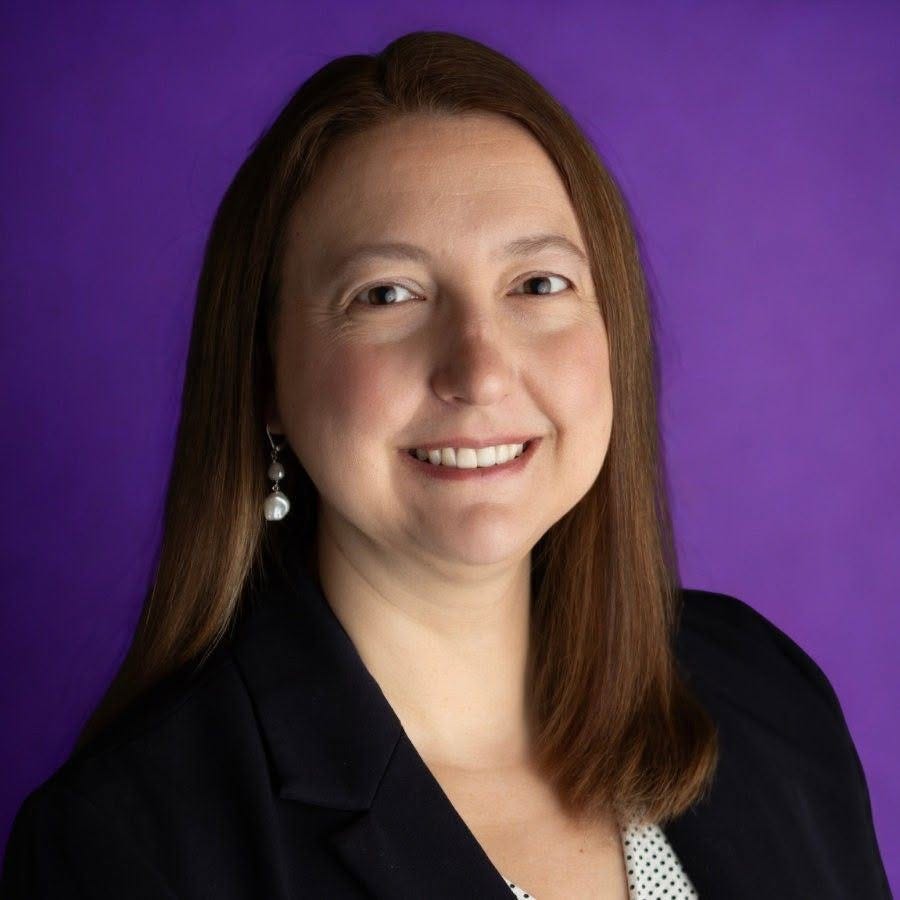
Courtney Scheff is a Navy veteran, attorney, former prosecutor, and 14-year North Royalton resident with experience in military law, civil litigation, and the Cuyahoga County Prosecutor’s Office.
Her background includes service in the U.S. Navy Judge Advocate General’s Corps, work as an Assistant Prosecuting Attorney, and community leadership through the North Royalton Democratic Club, PTA, MOMS Club, AARP Tax-Aide, and local civic organizations.
Scheff is a candidate focused on working families, public safety, core county services, strong public schools, unions, affordable health care, and fair treatment under the law.
Michael Gallagher
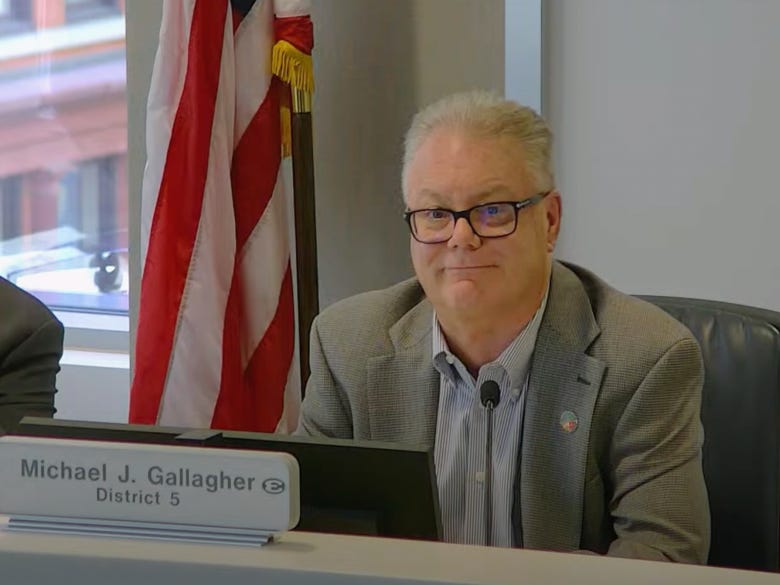
Michael Gallagher is the incumbent Cuyahoga County Council representative for District 5, first elected to County Council in 2010 and serving since 2011. His public service background includes 11 years on Strongsville City Council, including three years as Council President, service as a Southwest General Hospital trustee and Finance Committee chair, and a 30-year career with the 8th District Court of Appeals, where he retired as Deputy Court Administrator.
Gallagher is an experienced local official focused on public safety, county finances, juvenile justice, jail staffing, and serving as a check on county executive power.
On the Issues
Policy count from their websites: Scheff 4, Gallagher 0.
Courtney Scheff
Protect Property Taxpayers: Scheff says she wants to consolidate duplicative programs, cut unnecessary projects, and focus county spending on essential services in order to control costs and prevent future property tax increases.
Matt’s Take: I would like to know which duplicative programs Scheff wants to consolidate and which projects she considers unnecessary. I support balancing the budget, and I think it is one of the most important things Cuyahoga County can do, but this needs more detail because Gallagher is making a similar argument and both plans feel either vague or haphazard right now.
Laura’s Take: “Consolidate duplicative programs” and “cut unnecessary projects” are pretty vague, and are frankly baseline fiscal policy that should be in effect anyway as a core tenant of tax money stewardship. These statements are not policy positions backed by anything substantive. The largest avoidable cost in this county is a jail that climbed from $550 million to nearly $900 million in cost. If protecting taxpayers does not start with rooting out the corruption there, it is not a plan.
Promote Safer Communities: Scheff says she supports law enforcement while also promoting accountability and safe policies that protect residents and taxpayer dollars.
Matt’s Take: This is very similar to Gallagher’s framing on public safety, and “supporting law enforcement” by itself is not really a policy. It may reassure voters who think Democrats want to defund the police, but it needs more substance about what she would actually do.
Laura’s Take: “Support law enforcement” and “accountability” are generally what our public officials should be doing, but its vague language that doesn’t identify a problem or propose a real solution. Basically, this framing suggests that Scheff may be more commited to preserving the status-quo.
There are real issues in Cuyahoga county. The most glaring are the sheriff’s overtime issue, a jail construction with over $400 million in cost overruns, and a jail under state investigation where people keep dying. I would expect a former prosecutor like Scheff to produce a sharper, more policy-forward answer informed by her time in that office.
County overtime hit almost $40 million last year, and the sheriff’s department contributed north of $20 million of that number, with overtime hours nearly doubled since 2017. But, hiring 40 deputies to decrease overtime may be wrong solution in this case, and one fact settles it. After the County Executive’s office took control of the sheriff’s budget, overtime came in under budget for the first time in years, down more than 4,000 hours, with no new deputies hired. The problem was not that they were understaffed, it was that nobody watching the till.
In 2025, nearly half of the county’s 50 highest-paid employees worked for the sheriff, and 10 of them out-earned him. One deputy retired in 2024 after booking nearly $200,000 in overtime, which turned a job that pays about $89,000 into a $312,000 payday in a single year. That is well above the roughly $175,000 salary the County Executive earns, and because Ohio counts overtime toward your pension, that spike pays out for life (News 5 Cleveland, Feb. 2026). The overtime was approved with a rubber stamp, and I mean that literally. A supervisor had a stamp made of the sheriff’s own face and used it to sign off on overtime until the sheriff found out and banned it. Misappropriating taxpayer funds seems to be a game to some County employees.
This is called the corruption. Before this county hires 40 more people into that system, someone should explain why the overtime vanished the second the Executive looked at the books. Candidates for County Council need to present a plan on rooting out the corruption. Otherwise, as a voter, I’d assume they are running to ensure it continues.
Prioritize Core Services: Scheff says she wants to make sure residents continue to have access to essential county programs, including health services, social services, child protection, and senior support, especially as federal and state funding declines.
Matt’s Take: This seems connected to her property taxpayer argument about consolidating duplicative programs, which is also similar to Gallagher’s position. Clarification is still needed, but prioritizing core services as federal and state funding declines is a clearer contrast with Gallagher’s more cuts-and-consolidation framing.
Laura’s Take: (Illegal) Government clawbacks, and federal funding decreases are real and are forcing city, state, and county governments to make increasingly harder decisions. Its not a sustainable situation for homeowners who are stacked under increasing property tax bills across the state. There is a need to raise revenue to protect essential public service programs and my take on these policies are that neither candidate is specific enough about what the county will do about that aside from raising property taxes, which is not sustainable for most Cuyahoga County homeowners.
Invest in Public Goods to Promote Economic Growth: Scheff says she supports investing in roads, bridges, public hospitals, and parks to create jobs, strengthen neighborhoods, and attract new businesses.
Matt’s Take: Investing in roads, bridges, hospitals, and parks is critical, but Cuyahoga County needs to think bigger than basic maintenance. The question is how we use public investment to move the county into the 21st century, modernize communities, attract growth, and do it without burying taxpayers in new debt.
Laura’s Take: Our local infrastructure is not in good shape. I acknowledge its harder make headways under this Presidential Administration. I’d like to see a plan for how the County can claim a larger share of federal infrastructure funding. Luckily we currently have TWO Republican Senators representing us. How would candidates hold them accountable for delivering federal dollars for these critical local projects?
Michael Gallagher
Quick note on Mike Gallagher: Mike does not appear to have a campaign website, and honestly, he does not seem to be running much of a campaign. I am trying to make this as fair as possible, but from what I can find, he seems to be running on incumbency and an Irish last name while doing very little to tell voters what he has done, what he believes, or what he plans to do next. So I am going to compile this from the bits and pieces I can laboriously find across the internet, because he is not making it easy. Here is a link to a talk he had at the Strongsville GOP.
Public Safety and Sheriff Staffing: Gallagher has proposed hiring 40 additional sheriff’s deputies, arguing that the county can reduce overtime pressure inside the sheriff’s department and save money long-term. His analysis says the added hires could offset roughly $6.7 million in overtime and produce about $1.4 million in annual savings, while also addressing staffing problems tied to jail operations, inmate transports, electronic monitoring, and Cleveland inmates being held in the county jail.
Matt’s Take: I like this because it is an actual plan with actual numbers and actual proposed savings. Cuyahoga County clearly has a spending problem, and without real checks, balances, and cost controls, it is going to keep digging itself into a deeper hole.
Laura’s Take: As I said previously, the overtime issue is ridiculous and needs to be addressed. It is not apparent to me that hiring 40 extra Sheriff’s Deputies would help this issue fiscally because the County Executive has reduced overtime by 4,000 hours just by taking over the books. If there is a public safety issue this would solve, I would like to see Gallagher’s data on that. More Deputies doesn’t necessarily mean safer streets. I’d like to see how.
Jail and Justice Center: Gallagher supports moving forward with the new jail project, but argues that delays and political fighting drove the cost from earlier estimates of roughly $550 million to around $1 billion. His position is that the county waited too long, allowed politics to interfere, and now has little choice but to proceed because every month of delay adds more cost to taxpayers.
Matt’s Take: This is exactly what is wrong with government: they tell taxpayers one number, it balloons into another, and by the time it is done this could easily become a $1.5 to $2 billion project. Gallagher should be pushing to pull the plug, reset the process, and force this back into a real budget, but that may require more political courage than anyone in county government wants to show.
Laura’s Take: Translation - The jail is a Project Labor Agreement job, so the roughly $900 million in construction goes to the Cleveland building trades, whose business manager already welcomed the funding vote. Gallagher chairs public safety and sat on the steering committee that planned the project, and Council has already extended the county sales tax for another forty years, to 2067, to pay for it. Stopping now would cost the trades their biggest contract in years and force Council to admit it got played. So the real position from Gallagher is not really rooted in fiscal discipline, its ensuring he keeps the money moving and keeps Council bought in, even after prosecutors called the process illegal after the price blew past $900 million. Through all of it, his answer to critics is to put the "blinders on" and build.
Juvenile Crime and Juvenile Court Funding: Gallagher says juvenile crime is one of the county’s major public safety problems and has pushed for more support for juvenile court programs. He argues the county missed an opportunity by refusing to fund roughly $1 million in recommendations from a committee he helped put together, which included judges, prosecutors, public defenders, court advocates, and others working on juvenile justice issues.
Matt’s Take: Spending $1 million to fund another committee feels silly when Cuyahoga County has so many underdeveloped, gutted-out, poorly invested-in, high-crime areas that everyone keeps neglecting. This feels like missing the forest for the trees, and it is easier to miss that broader failure from places like Strongsville. Seems like a dog whistle for the Strongsville GOP.
Laura’s Take: Look who's on the committee he suggested: judges, prosecutors, public defenders, and court advocates, every one of them inside the system the money would fund, and not one parent, kid, or neighborhood voice from where crime actually happens. A panel built from the people who run the system will always find that the system needs more money. Groups like this are often founded as fronts for municipal systems to a). Seem like they are working to solve problems, and b). rubber stamp solutions that benefit themselves, their buddies, or the status quo. If Gallagher was really serious about addressing juvenile crime he would make sure there is money to support community organizations and programs that actually address poverty, recidivism rates, and youth engagement. He would be active in parent communities and include them in any process that is being build to address the issue.
County Spending and Budget Discipline: Gallagher argues that Cuyahoga County does not have a money problem as much as a spending problem. He says the county should focus on its core responsibilities: public safety, the courts, and health and human services for residents who cannot provide for themselves. He also says he voted against the county budget for the first time in his elected career because he believed the spending priorities were wrong.
Matt’s Take: I 100% agree with this. Cuyahoga County has a spending problem, and county government should be focused on its core responsibilities.
Laura’s Take: This is an area I agree with Gallagher. We do have a spending problem, but more than that, we have a spending priority problem.
Property Taxes and County Planning: Gallagher says the county has not done enough planning for the possible elimination or major reduction of property taxes in Ohio. He argues that while the county’s general fund may not rely as heavily on property taxes as schools and local governments do, the county would still face serious pressure from libraries, Metroparks, developmental disability services, and other property-tax-supported entities if that revenue disappeared.
Matt’s Take: The property tax petition did not get enough signatures this time, but this issue is not going away, and I agree with planning for the future. If county leaders are waiting until property tax revenue is actually gone before developing a real plan, or even an outline, shit, even a mood board, then they are being irresponsible.
Laura’s Take: Gallagher is probably right here. I think
Consolidating Services: Gallagher says the county should look at consolidating services, especially in areas like homelessness, health care, and mental health, rather than simply continuing to fund many separate nonprofits and programs. His argument is that the county may be able to deliver services more efficiently if it reduces duplication and coordinates programs more directly.
Matt’s Take: Scheff also talks about consolidating services, but she seems more careful about protecting health care and mental health, though we still need more detail from her. For Gallagher, I agree with cutting costs and being fiscally responsible, but homelessness, health care, and mental health are very different animals that need to be handled with extreme care, and we should be funding treatment centers, supporting professionals with a clear goal, and not just slapping them together with whatever other service you want to gut.
Laura’s Take: No, no, no, no, and no. "Consolidation" and "reducing duplication" are the words you reach for when you want to move money away from the small nonprofits that actually know their neighborhoods and hand it to preferred contractors (likely friendly with county government) who do not. The nonprofits fighting homelessness in this county are not duplication. They are the only people in this equation who know your block, your shelter, your name. Coordinating them into one county contract does not make the help more efficient. It makes your taxpayer money easier to steer. Cuyahoga County should be putting more into the organizations that work these communities every day, not less, and it should stop pretending that funneling dollars upward to people who have never set foot on the street they are paid to fix is a reform.
Mental Health and the Jail: Gallagher argues that the jail has effectively become one of the largest mental health facilities in Ohio because a large share of people in the jail have psychological problems. He says the county needs better coordination around mental health care, especially after the loss of the county’s only psychiatric emergency department.
Matt’s Take: This is 100% it. People with mental health issues are being treated like criminals and locked in jail because society has nowhere else to put them, but mental illness and criminal behavior are not the same thing and should not be treated the same way.
Laura’s Take: I agree with Matt. But Gallagher is vague here, and I have no idea what he believes the plan should be to address this. Both candidates should present their plans to address it.
Sports Facilities and Public Subsidies: Gallagher is critical of the county’s financial obligations tied to professional sports facilities. He says the county owns or is financially tied to major facilities, has borrowed money to meet those obligations, and cannot afford endless public handouts to teams. He points to his vote against funding for the Guardians’ stadium work as an example of saying no to additional taxpayer support.
Matt’s Take: 100%. Can we please stop using public money to fund professional sports teams, especially when the Guardians are one of the most profitable teams in baseball. They can fix their own damn stadium with the money they make from $8 shitty hot dogs, $15 beers, and $7 boxes of popcorn. But, County Council is debating adding 0.25% sales tax to give the sports teams more of a handout? Give me a break. Someone fight the insanity please? Please!
Laura’s Take: I agree with Gallagher here. How much have we funded billionaire sports owners while people in this county can’t pay mortgages, rents, and our schools are critically underfunded by the state. Sports owners who want upgrades should pay for them with their own profits, just like any other business would be expected to.
Summary: Scheff vs Gallagher
Matt’s Take
The first thing that stands out in this race is that Mike Gallagher has years and years of public service history online, but if you actually want to understand who he is, what he has done, or what he plans to do next, you have to dig for it. The fact that an incumbent county councilman does not appear to have a professional campaign website, updated pictures, clear policy pages, or even a basic page linking to articles about his work, accomplishments, or legislation is complete bullshit.
It makes it look like he is not taking this race seriously. Maybe he thinks he can skate by on incumbency. Maybe he thinks his name recognition is enough. Maybe he knows Courtney Scheff is going to be a tough candidate and has decided his time is up. Or maybe he just does not care about running a real campaign. Whatever the answer is, it bothers me. I went looking for a website, and if one exists, I am already pages deep into Google and not finding it. His Facebook does not tell voters much either. For a sitting county councilman, that is unacceptable.
And yes, parades do not decide elections. But when Mike Gallagher shows up with two people walking with him, and Courtney Scheff shows up in Berea with around 20, that tells you something. It does not prove who is better on policy, and it does not mean she will win. But it does show who is building a team, who is putting in the work, and who is making the basic effort to show voters, “I am taking this seriously.”
With that said, Mike Gallagher does serve an important role on Cuyahoga County Council. He is one of the few people on council who appears willing to function as an actual check and balance on County Executive Chris Ronayne. Ronayne has his crew, and too many people seem perfectly content to fall in line with whatever the executive wants. County Council is not supposed to be a rubber stamp. They do not need to fight the executive on everything, but they are supposed to challenge, question, and check him when necessary.
With that said, Mike Gallagher does serve an important role on Cuyahoga County Council. He is one of the few people on council who appears willing to function as an actual check and balance on County Executive Chris Ronayne. Ronayne has his little crew of people who go around, take pictures with him, and just agree with him.
And then you have the geriatric, old-ass Council President Dale Miller, who is completely out of touch. Why the hell is he council president?
County Council is not supposed to be a rubber stamp. They do not need to fight the executive on everything, but they are supposed to challenge, question, and check him when necessary.
That is one of my biggest concerns in this race. Without Gallagher, Cuyahoga County risks turning into a blank check for the executive branch. Spend, spend, spend. Approve what the executive wants. Protect the relationships. Keep the party machine happy. That is not healthy government.
Courtney, on the other hand, seems much closer to Ronayne, and I do worry that Chris is supporting her because he sees her as an ally. That worries me in a county where one-party control can easily become a system of friends, campaign relationships, and political favors. Cuyahoga County cannot become a place where everyone knows each other from the campaign trail, everyone protects their reputation inside the party, and nobody wants to challenge outrageous bullshit because it might upset the wrong people.
I also wish Courtney had more depth to her policies. Right now, too much of it reads like pithy Democratic talking points without enough substance behind them.
But here is the other side of it: Courtney Scheff is one of the most brilliant people I have ever met in politics. Courtney and I have had numerous conversations over the years, some more than an hour, some close to two hours, about politics, policy, the Democratic Party, and the state of things in this county. I cannot think of many people I have spoken with who are as honest, candid, detailed, and serious about policy as Courtney.
She is brilliant, hardworking, and honestly overqualified for this job. She more than has the intelligence, her work ethic, or her ability. My question is whether she would be willing to break from Chris Ronayne and the county party structure when the moment calls for it.
Because besides those connections and that concern, there are very few people in the Democratic Party I respect more than Courtney Scheff.
Laura’s Take
I don’t know either of these candidates personally. So, I am filtering my assessment through a lens of a 23 year public policy and public affairs career, a public policy master’s degree, and over a decade in politics. People want someone who will fight for them. If either is interested in bringing more attention to, or in invigorating, these races with energy, help voters understand how they are being screwed right now and propose bold policy solutions for solving the county corruption problems. People are tired of maintaining the status quo, they are tired of being screwed, and they want to know someone is fighting for them.