

The field for the May 5th primary is getting more settled by the day, especially after the Cuyahoga County Democratic Party executive committee met on February 7 to issue its endorsements.
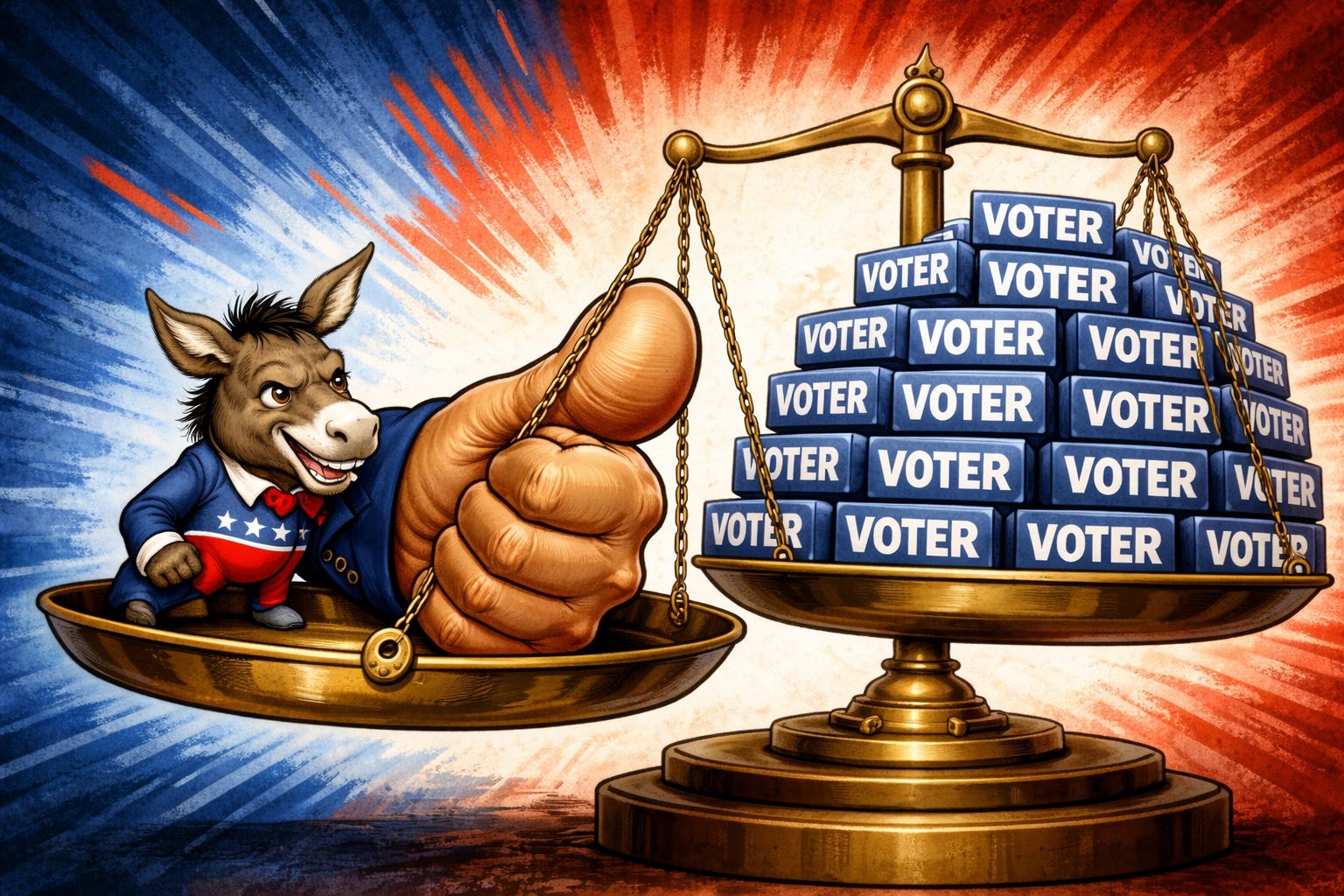
I want to be very clear about where I stand on this.
I do not like party endorsements in primaries.
There are only two situations where I believe a party should step in before voters do. First, if one of the candidates is legitimately problematic. That means serious legal issues, ethical red flags, or conduct that would make them unfit to represent the party or serve in office. Second, if a primary is being actively interfered with by bad actors from another party trying to manipulate the outcome.
Outside of those two scenarios, primaries should be decided by voters.
That said, endorsements did happen, and there are a few things worth putting on everyone’s radar.
First, the county party did not endorse state or federal candidates. Those endorsements, if they come, would be handled by the Ohio Democratic Party. There has been chatter that the state party may meet on February 28, but as of now it remains unclear whether the Ohio Democratic Party will endorse in the 7th Congressional District race at all. It would not surprise me if they do. If the DCCC strongly favors a candidate and wants to put its thumb on the scale, that endorsement could happen. If they do not, then the primary will remain open and voters will decide.
Second, many of the endorsements that did occur were largely ceremonial. In several cases, there was no primary. These were incumbents or candidates running unopposed. In those situations, an endorsement is effectively the party patting itself on the back and saying, “Good luck, now go win.”
However, there were races with actual competition, and those deserve attention.
In State Senate District 13, Bride Rose Sweeney received the endorsement over Willie Britt. This outcome was not surprising. Sweeney is a longtime incumbent and was effectively running to succeed Nikki Antonio’s seat.
In House District 18, Davida Russell received the endorsement.
In House District 19, Nicole Sigurdson received the endorsement.
In House District 20, Eugene Miller secured the endorsement.
Moving to county council races, there was notable activity in County Council District 3, where two progressive challengers ran against longtime incumbent Martin J. Sweeney. Sweeney received approximately 77 percent of the executive committee vote, securing the endorsement.
In County Council District 11, there was no endorsement.
Turning to judicial races, one race I was watching closely was for Judge of the Court of Common Pleas. In that race, Diane P. Russell received the endorsement over Jennifer McTernan.
But this is where things start to require closer attention.
One endorsement, however, deserves closer scrutiny.
The 8th District Court of Appeals judicial race initially included three candidates: Jeff Crossman, Andrea Nelson Moore, and John J. Russo.
Jeff Crossman is someone I know personally. He is a former city councilman. He is currently the attorney suing the Ohio legislature over the $600 million in unclaimed funds used for the Browns stadium deal.
I’ve mentioned that case before, and I respect the work.
However, according to reporting by Signal Cleveland and The Rooster , on November 24, 2025, Jeff Crossman donated $107,903.73 to the Cuyahoga County Democratic Party from the terminated committee of his 2022 Attorney General campaign.

Signal reported that the donation was significant and raised questions about whether it was intended to secure an executive committee endorsement.
On February 7, the executive committee endorsed Jeff Crossman.
Both primary challengers withdrew from the race.
The result is that Jeff Crossman now effectively walks into a six-year judicial term beginning February 9, 2027. That seat carries an annual salary of approximately $187,000. Over six years, that is more than $1.1 million in salary alone, and when OPERS retirement benefits are included, total compensation approaches $1.28 million.
I want to be very careful here.
I am not accusing Jeff Crossman of wrongdoing. I am not asserting intent. I am not claiming a quid pro quo.
But optics matter.
Timing matters.
And when nearly $108,000 flows from a candidate’s terminated campaign committee to the county party shortly before an endorsement, followed by the sudden exit of all challengers, reasonable people are allowed to ask questions.
If there was coordination, it is deeply troubling. If there was pressure applied behind the scenes, it is unacceptable. And if this was all coincidence, then it deserves transparency to clear the air.
That responsibility does not fall solely on Jeff Crossman. It also falls on the party leadership, including Chair David Brock, to address the appearance of a conflict and explain how endorsement decisions were made. The conflict? Money buying politics.
There is another layer to this that cannot be ignored: party finances… TBD
Again, I hope there is reporting I have missed since mid-January that clarifies this. I will be watching Signal and The Rooster closely for follow-up. And I genuinely hope this situation has a clean explanation.
But hope is not a substitute for scrutiny.
Endorsements are power. Money is power. When the two collide inside a primary, the burden of transparency becomes much higher. If the party wants trust, it has to earn it, especially when the stakes involve lifetime careers, six-year terms, and seven-figure compensation.
This is exactly why I oppose party endorsements in primaries.
Russo I think was Crossman's closest competitor for the endorsement. He had a lot of negatives. The Fundraiser at a George Family restaurant right after the conviction spoke to me the loudest. For me that set up a reason to make sure he didn't get the endorsement. I saw Crossman more on the trail. The house district races should have been open. I would have abstained in those.