

This week has made one thing increasingly obvious.
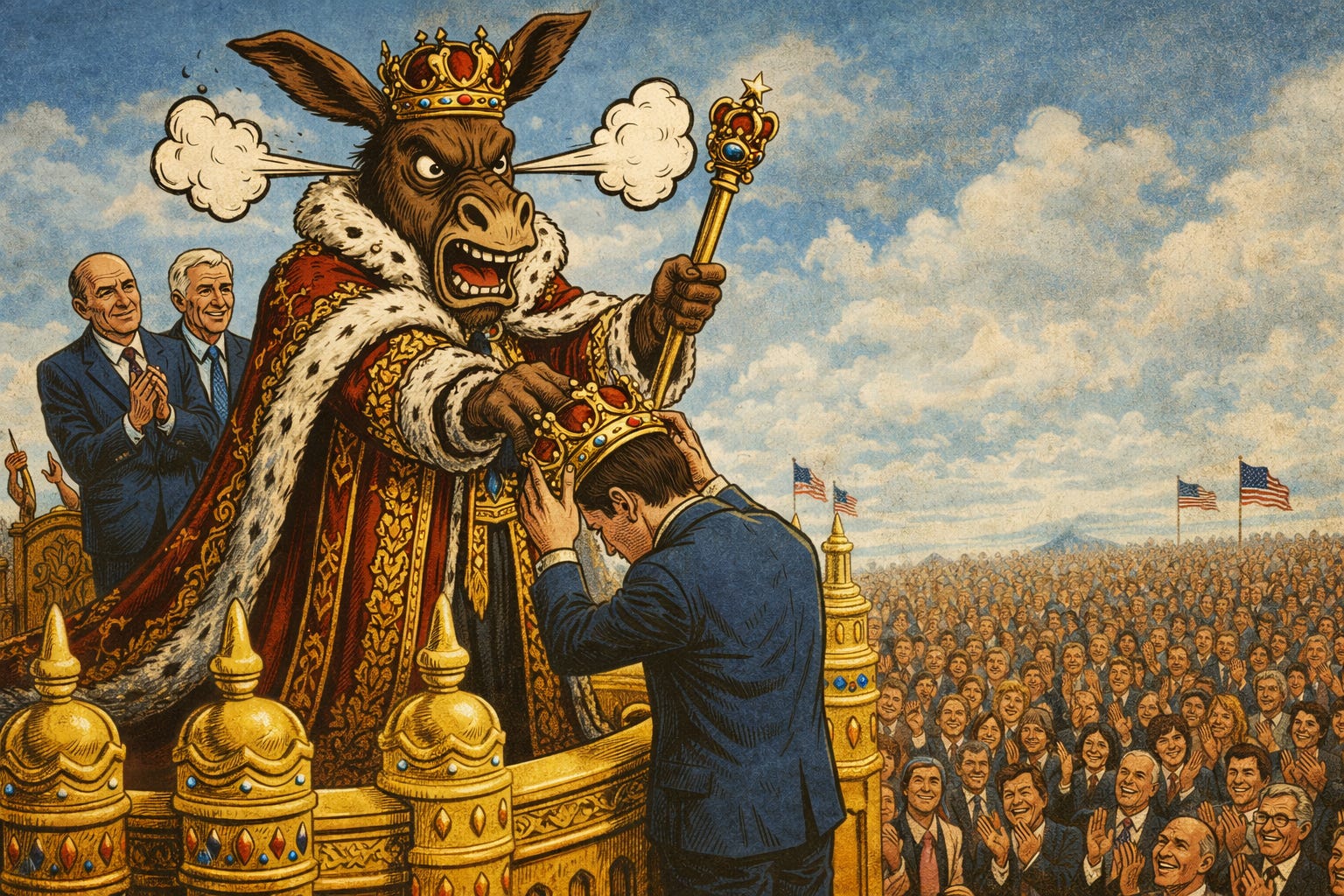
The primary system, party power structures, and county organizations, both Democrat and Republican, are designed first to preserve power. Not to expand voter choice. Not to empower newcomers. Not to elevate the will of the people.
Too often, the path to office is not about performance or ideas. It is about proximity. It is about insider meetings, back-room conversations, club appearances, photo ops, and knowing which elbows to rub. Candidates who follow the rules of the internal club system get promoted. Candidates who challenge it get frozen out.
And it is happening in both parties.
Democrats will tell you they are defending democracy. Republicans will tell you they are defending order. Meanwhile, both parties work to limit real competition.
Two things happened this week that perfectly illustrate the problem.
The Court of Common Pleas Primaries That Disappeared
We started with Jeff Crossman’s primary clearing, with multiple candidates dropping out. And voters were left without a contested choice. Actually, no choice at all.
Yet for some reason, people still want to defend a primary endorsement system that increasingly results in no primary at all.
Then, to put icing on the anti-democracy cake, in the Democratic primary for a Court of Common Pleas seat between Jennifer McTernan and Diane Russell, McTernan dropped out.
Both were qualified. Both were credible. This was not a fringe candidate versus an insider, or even incumbent versus newcomer. This was two strong candidates competing.
Because judicial candidates can choose which open seat to run for, the calculation becomes strategic. One seat appeared to offer a clearer path. It was not an incumbent seat. It looked winnable. Two candidates entered.
The party endorsed Diane Russell.
Once that endorsement came down, the writing was on the wall. The sample ballot advantage. The money. The institutional support. The club infrastructure. Everything shifts behind the endorsed candidate.
McTernan stepped aside.
Now voters have no primary choice for that seat. And ultimately no choice at all.
Not one vote cast by “the people” needed. You have “your” judges on the bench. So shut up and be thankful for benevolence.
After the election, party leadership will go to club meetings and proudly announce that all or nearly all endorsed candidates won. Of course they did. When you clear the field and consolidate power, victory is manufactured.
This is not about Diane Russell’s qualifications. She is absolutely qualified.
This is about whether the party should be endorsing in primaries.
When that happens, voters lose their voice. And the DID lose choice. And now one candidate walks into a six-year judicial term, worth roughly $1.2 million, without ever facing a contested primary.
Then the House & Senate Banned Ranked-Choice Voting
As if that was not enough, the Ohio Senate passed a bill banning ranked-choice voting.
The vote was 27–5 in the Senate. It then passed the House 65–27. Both chambers included Democrats voting in favor.
Those margins create a veto-proof majority. If Governor Mike DeWine were to veto the bill, which I do not expect him to do, the legislature has the votes to override him.
Ranked-choice voting would dilute party control in primaries. It reduces the spoiler effect. It allows newcomers and independent-minded candidates to compete without fear of splitting the vote. It expands voter choice while still producing majority-supported winners.
And it was banned.
Do not assume this was purely partisan. Democrats supported it. The bill in the Senate was even co-sponsored by a Democrat.
I am also not convinced that all 27 Democratic “no” votes in the House were anything more than political posturing. It is easy to vote no when you know the bill will pass comfortably anyway. You get to signal support for reform without risking the system changing. Now you can go back and pander to the base, “Look at how democratic I am!”
Meanwhile, the primary structure remains protected.
The party(ies) know s exactly what ranked-choice voting would do. It would weaken insider leverage. It would make endorsements less powerful. It would give voters more control.
If you say you support democracy but oppose reforms that expand voter choice, you are not defending democracy. You are defending power.
And voters notice.
Democracy in Name Only (DINO)
I have seen too much defense of this system.
Closed-door collusion. Endorsements in contested primaries. Big money entering party structures without full transparency. Banning systems that increase voter choice.
And then the same leaders say we must defend democracy.
You cannot defend democracy nationally while restricting it locally.
If the Cuyahoga County Democratic Party truly wants to increase turnout by 80,000 voters, the answer is not consolidation. It is competition.
Robust primaries energize voters. Inclusion builds engagement. Competition drives turnout.
Clearing fields, managing outcomes, and endorsing favorites does not inspire people.
The young person thinking about running. The outsider who wants to get involved. The voter who believes they finally have a say.
They eventually see the machinery.
And many walk away.
This is Bigger Than 2026
This is structural.
The Democratic Party has “Democratic” in its name. It should role model democracy.
Stop endorsing in primaries!
Stop pretending limiting voter choice protects stability.
Stop defending insider baseball as if it is virtue.
I am calling on the Cuyahoga County Democratic Party to end the primary endorsement system and champion actual democratic competition across all 88 counties in Ohio.