

There is a very real conflict of interest between someone running for office and the citizens in a democracy. And it is obvious if you are willing to be honest about it.
You can say one thing publicly and want another privately. I know that because I have lived it.
Even in my own races, I did not want a primary. I did not want competition. Primaries are brutal. They are popularity contests amongst so called friends and allies. They burn time, money, and energy just to get through one election before you even get to the actual fight you care about. And if you are on the same party “team,” even if your politics are different, it feels pointless. Wasteful. Self-inflicted.
Anyone who pretends otherwise is lying to themselves.
But…at the same time.
Every single person who is not completely delusional understands that primaries and competition are essential to a healthy democracy. The more people running, the better. That tension is not a bug. It is the feature.
Both things are true. Candidates do not want competition. Democracy absolutely requires it.
What Happens in a One-Party County
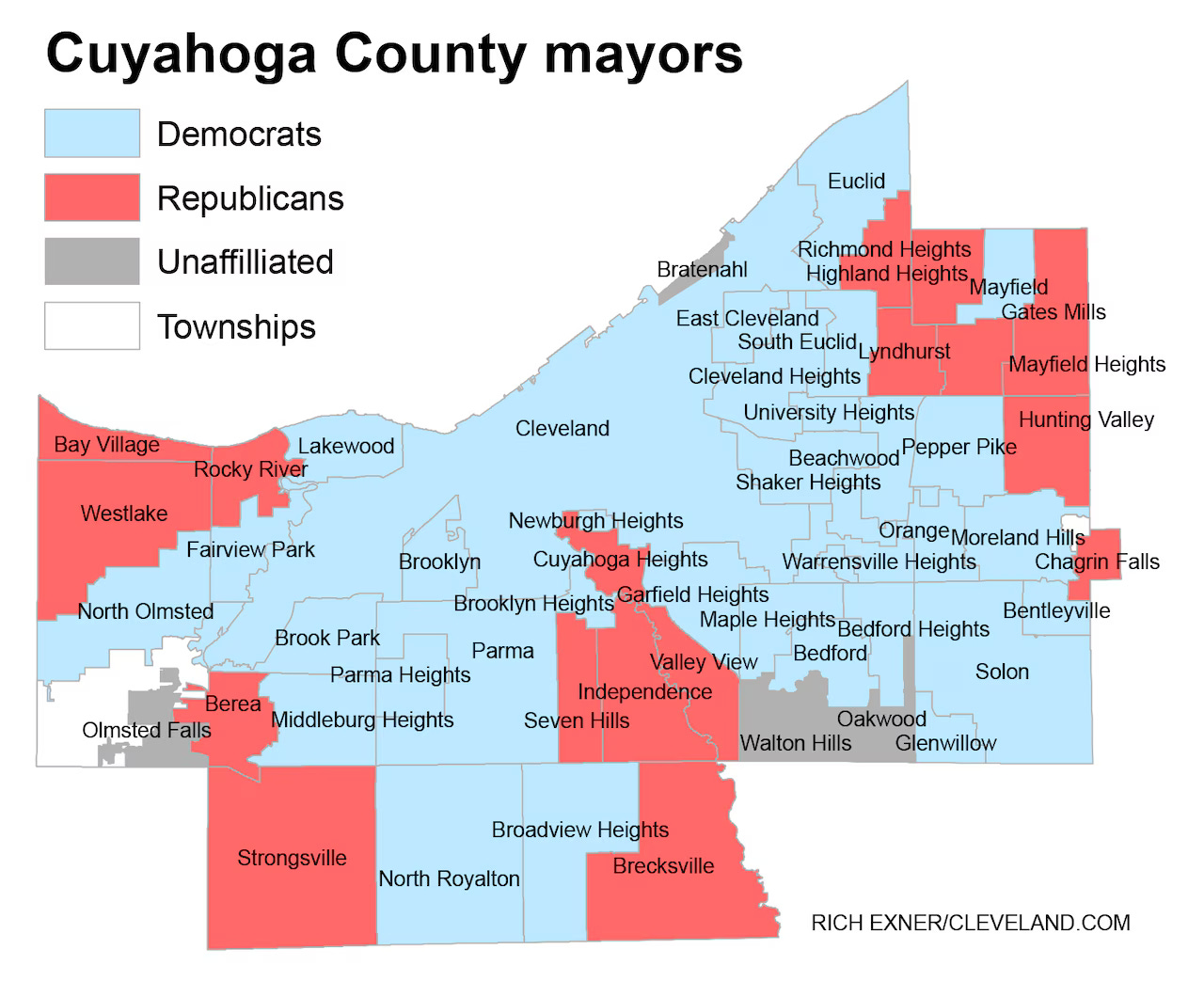
This problem gets magnified in places like Cuyahoga County.
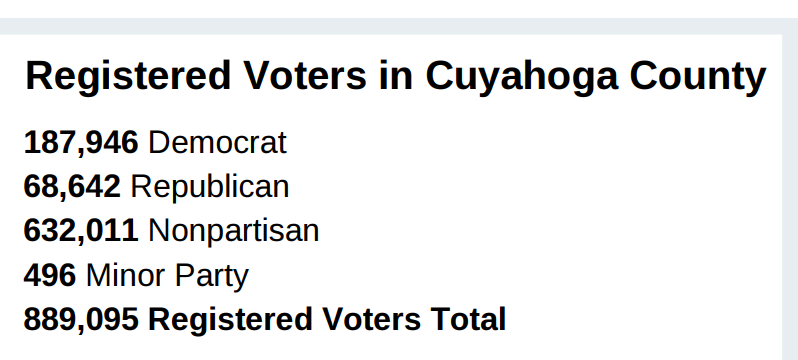
It is overwhelmingly Democratic. County council. County offices. Boards. Judges. Mayors. City councils. Outside of a few pockets, Democrats control almost everything.
That level of dominance changes incentives.
The county party chair’s job is not to “protect democracy.” That is not what the job is. The job is to maintain party control, raise money, win elections, and keep the machine functioning. The more Democratic the county stays, the better the chair is doing their job.
By that metric, the current leadership has done extremely well. And nothing I am saying erases that reality.
But party success is not the same thing as democratic health.
When There Is No Competition, Democracy Freezes
In a one-party environment, the focus shifts from winning elections to protecting incumbents.
That is where things get weird.
Races get cleared. Conversations happen behind closed doors. Potential challengers are quietly told that the party has already decided who it is backing. That there is no real path forward unless leadership wants there to be one.
Primaries disappear.
And if someone ignores the warning and runs anyway, there is hell to pay. Donors dry up. Support vanishes. You get frozen out. Not by voters. By the party.
People like to call this “strategy.” But what it really does is stop people from practicing democracy at all.
Uncontested Races Are Appointments
When there is no competition, what you effectively have is an appointment system.
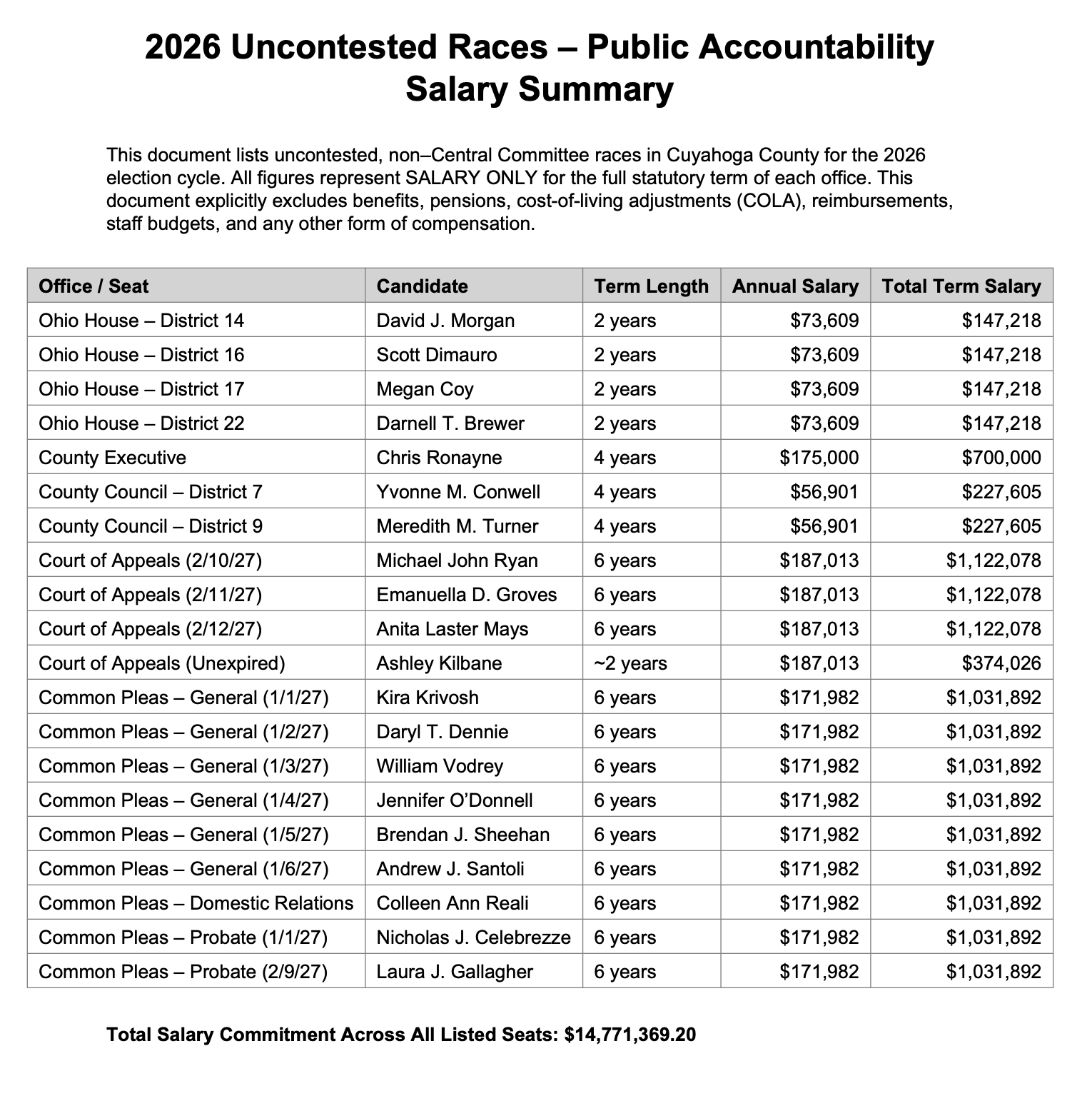
People walk into term-limited contract jobs paid for by taxpayers. Guaranteed salaries. Guaranteed benefits. Little risk. All without ever having to defend their record or earn a contested win.
Judges are the clearest example.
Six-year terms. Roughly $170,000 a year. Over a million dollars per term. Yes, many of them could make more money practicing law. That is not the point.
The point is certainty.
Judges control their own dockets. The process is opaque. You usually have no idea how they will rule. They cannot comment publicly. Oversight is limited. And unless something goes badly wrong or a case goes viral, the public barely notices.
And in many cases, the path is cleared for them.
Run unopposed. Serve six years. Run again.
That should make people pause.
I want to be very clear about this.
I know many of the people on these lists personally. This is not an attack on their character or their competence. If you hear it that way, that says more about you than about what I am arguing.
This is about structure. Incentives. Power.
Candidates do not want competition. It is exhausting. But unless we are ignorant or willfully drinking “The Kool-Aid,” we all know that democracy requires contested races. Primaries. General elections. Choice.
Without that, people are not being elected. They are being handed long-term jobs as rewards for party loyalty.
That is not democracy. That is a fiefdom.
Why I Put This on Your Radar
As of right now, and yes this can still change before filing deadlines close, millions of dollars in taxpayer money are likely to go to officials who do not have to work to get elected. They will not need persuade voters. They did not defend their record. They did not face opposition.
They signed up and walked in.
I think that is a problem.
Not because of who these people are. But because of what the system encourages.
A democracy that avoids competition is not stable. It is comfortable. And comfort is how accountability quietly disappears.
We need Rank Choice Voting. It would encourage more candidates, giving voters more options to find someone who they feel represents them. The General Government Committee has the 4th hearing tomorrow on Ohio SB 63, which seeks to ban RCV in all elections and penalize municipalities that adopt it by withholding local government fund distributions. There have been many letters of opposition submitted, but will our Ohio politicians care what the voters want? Nope!
Thank you for your column, which I read with interest.
You're correct that most incumbents don't want to have to engage in a contested primary election campaign, for all the reasons you mention. Although I appear on your list as being unopposed in my own reelection campaign this year, I actually have opponents in both the Democratic primary and in the general election in November. Competitive elections are good for democracy, even if not welcomed by those running!
For more about my candidacy, go to VoteVodrey.com.
Thanks again, and best wishes.
Judge William Vodrey
Cuyahoga County Court of Common Pleas