

Guest Writer: Dani Pajak is a local Angry Ohioan and guest contributor sharing what is on his mind. In this piece, Dani looks at the Cuyahoga County Democratic Party, the Democratic Party as a whole, and what lessons we can learn from the past by examining current events through the lens of Greek mythology.
Greek mythology is full of collapses that did not come from invading armies or divine punishment. They came from within, from pride, division, and blind spots that leaders refused to see until it was too late.
These stories are thousands of years old, but the warnings feel uncomfortably familiar when held up against the modern Democratic Party.
Today’s Democrats face no shortage of external challenges. The deeper threat, the one that echoes through the myths of the House of Atreus, Icarus, Laocoön, Athens, and Pandora, comes from inside the house.
These ancient stories were not written for Democrats.
The lessons might as well have been.
1. A Party at War With Itself: The House of Atreus
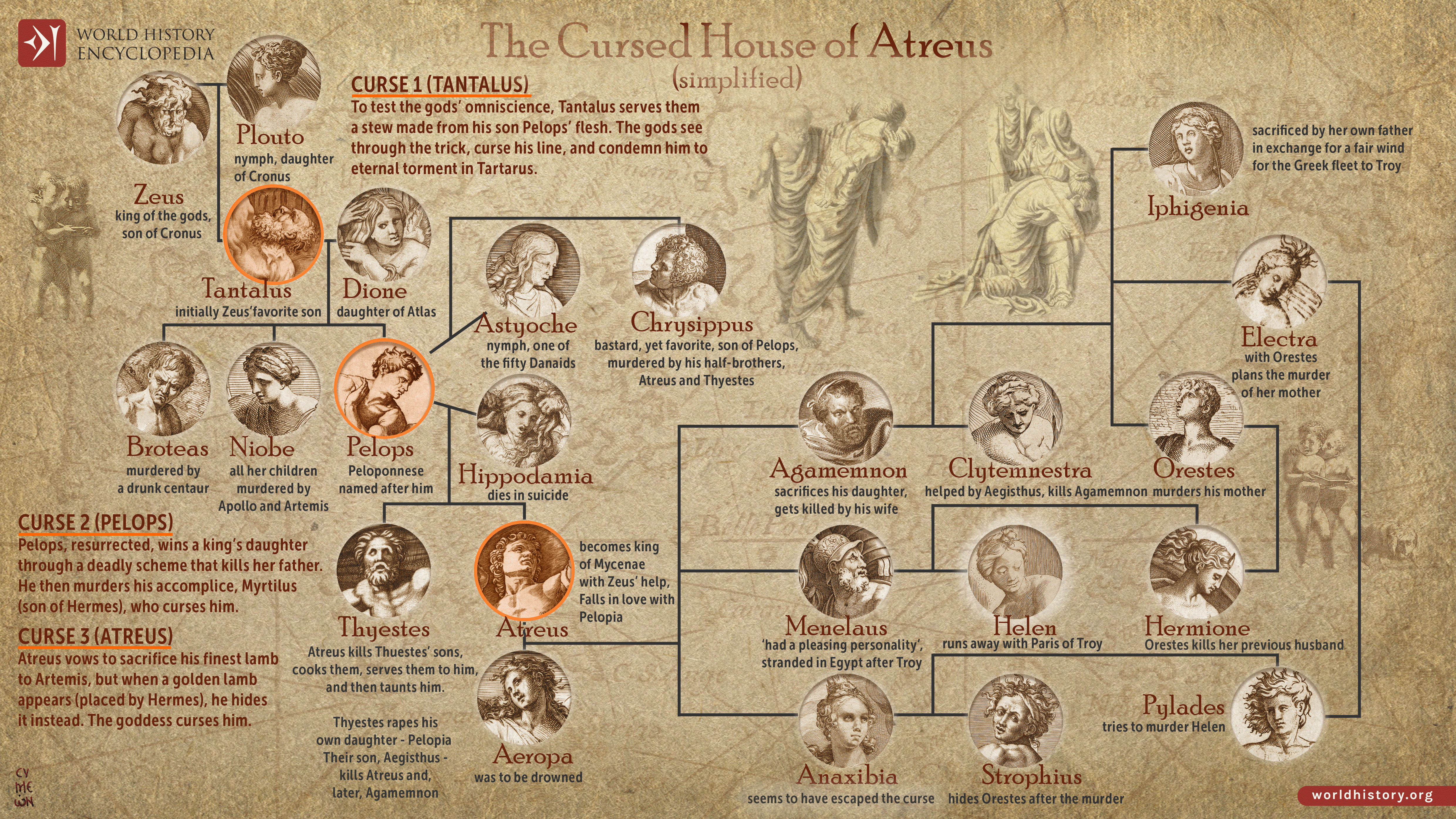
The House of Atreus is one of mythology’s most infamous implosions.
Atreus murdered his nephews. Agamemnon sacrificed his daughter. Clytemnestra killed Agamemnon. Orestes killed Clytemnestra. Every generation tore itself apart.
The family did not fall because of an enemy. It fell because it could not stop fighting itself and that dynamic is painfully recognizable.
The Democratic Party is not a unified institution. It is a coalition of factions that often seem more interested in battling each other than representing the voters who put them in office.
Progressives pull one direction. Moderates pull another. Activists and establishment figures speak different political languages entirely.
From the outside, the tension is obvious. It is difficult for a party to claim it speaks for the country when it cannot agree on how to speak to itself.
The House of Atreus reminds us that internal conflict does not simply weaken a political institution. It defines its downfall.
2. Overreach and the Righteous Fall: Icarus
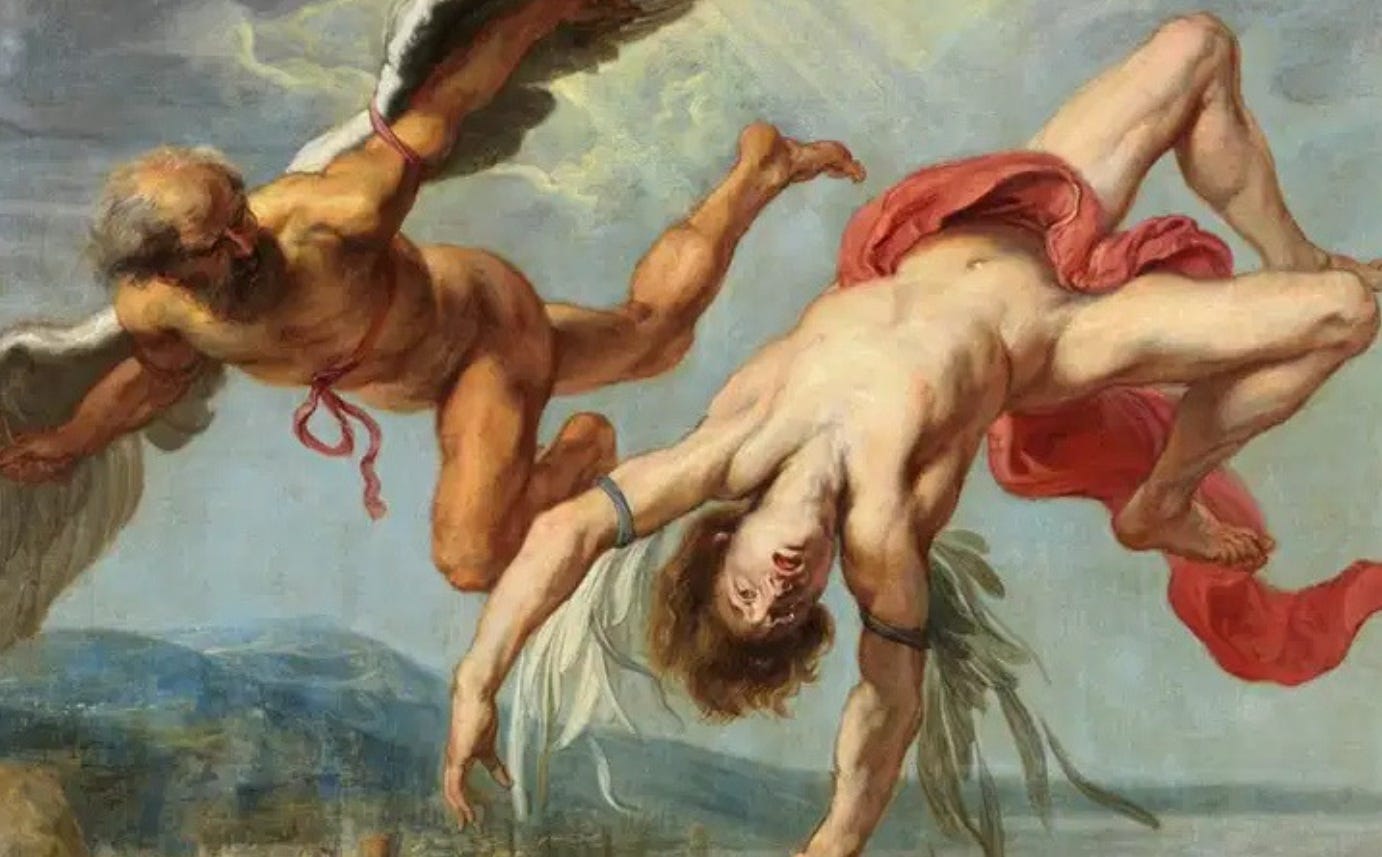
Icarus is remembered for one mistake.
He flew too close to the sun. His wings were brilliant. His intentions were pure. He ignored the limits of the moment. The wax melted. He fell.
The Democratic Party often repeats this pattern. It pushes sweeping cultural or policy shifts with the assumption that the public will simply adjust.
Sometimes the country does. Sometimes it does not.
And when it does not, the backlash is fierce.
Healthcare reforms, environmental regulations, and education policies, even when well intentioned, can trigger resistance when rolled out too quickly or without clear communication.
The party’s challenge is not its ambition. It is the assumption that ambition alone protects it from consequences.
Icarus teaches that good ideas still need guardrails.
3. Warnings Ignored: Laocoön and the Trojan Horse
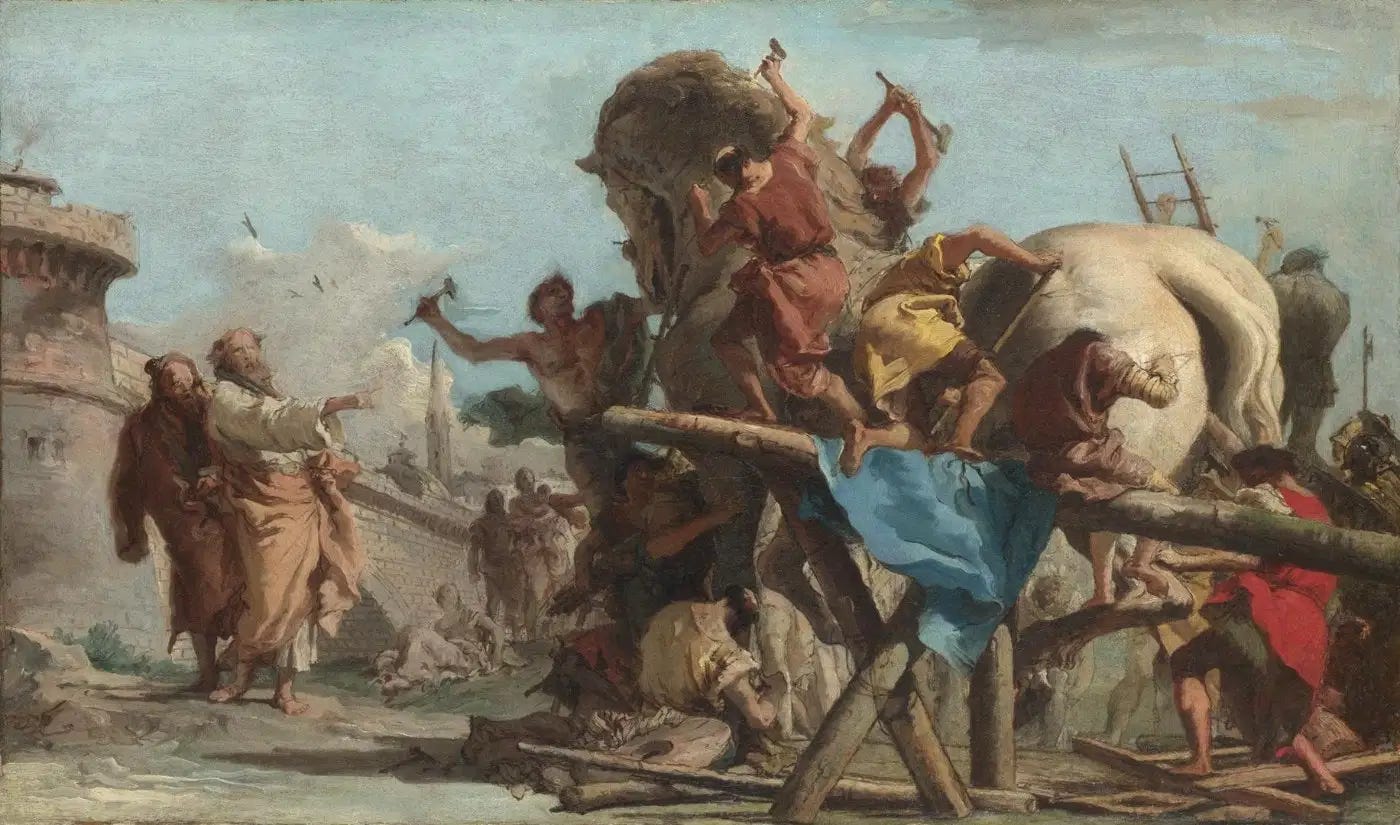
Laocoön saw the wooden horse and immediately understood the danger.
He warned Troy. He insisted. He shouted. He was ignored. Troy paid the price.
The Democratic Party has its own Laocoöns. Organizers, strategists, working class voters, minority communities, and local leaders raise concerns about messaging, economic anxiety, or the way certain policies land with everyday families.
These warnings are often dismissed not because they are wrong, but because they are inconvenient.
When people inside the party say that a message is not connecting, or a policy is confusing, or a strategy is alienating voters, those signals should be treated as guidance, not noise.
Troy did not fall because the Greeks were clever.
It fell because it silenced the one person who saw the danger clearly.
4. The Arrogance of Being Right: Athens

Athens once believed it was the intellectual and moral center of the world.
That confidence led to the disastrous Sicilian Expedition during the Peloponnesian War. The campaign was launched on the assumption that Athens was too smart, too righteous, and too powerful to fail.
It failed spectacularly. and the city never recovered.
The Democratic Party often carries that same energy.
It assumes that being right is enough.
It assumes that demographics guarantee victory.
It assumes that moral arguments automatically persuade.
It assumes that voters will naturally align with the party because it sees itself as the moral center of American politics.
Athens learned that strategy matters. Humility matters. Showing up matters. A party cannot rely on righteousness alone.
It must earn trust, not assume it.
5. Blind Spots and Unintended Consequences: Pandora

Pandora did not intend to unleash disaster. She opened a container she believed held something small and harmless. Curiosity felt natural. The moment felt insignificant. Yet once the lid lifted, forces she never imagined escaped into the world.
Sickness, conflict, and hardship poured out faster than she could react. What began as a simple choice became the spark for a chain of consequences she could not contain.
Her story shows how downfall often begins. Not with a dramatic collapse. Not with an obvious mistake. It begins quietly, with a decision that seems safe until its effects spread far beyond the moment. Pandora’s act did not destroy the world in an instant. It weakened it, unsettled it, and changed it in ways that could not be undone.
The Democratic Party faces a similar danger. Policies meant to help can create frustration or confusion. Programs designed to support families can become bureaucratic obstacles.
Regulations meant to protect communities can end up hurting small businesses. Each initiative starts with good intentions. Each aims to solve a problem or offer support. But when the consequences ripple outward in ways the party did not anticipate, the political cost grows. Trust erodes. Voters feel the impact long before leaders recognize it.
Pandora reminds us that vulnerability rarely arrives through a single catastrophic event. It emerges through accumulated outcomes that escape control. Her story teaches that leaders must examine not only what they intend, but the world they create once their decisions are released.
Once the lid is open, the consequences do not return to the jar.
The Shared Warning: The Threat Comes From Within
All five myths point to the same idea.
Powerful institutions are rarely destroyed from the outside. They collapse because of division, overreach, ignored warnings, strategic arrogance, and blind spots.
The Democratic Party is not doomed. But, it IS vulnerable.
The vulnerabilities look a lot like the ones that brought down mythology’s greatest houses and cities.
If the party wants to avoid repeating these ancient collapses, it must realign itself with the people who once trusted it without hesitation.
It starts with unity. Not performative unity. Real unity built on shared goals that matter to everyday life.
Voters want stability, clarity, and representatives who can walk out of a room with one message instead of five.
It requires listening. Slowing down. Hearing concerns before rolling out major shifts. Recognizing that real people live with the consequences of political decisions.
It demands taking internal warnings seriously.
Feedback from working class voters, minority communities, and local leaders should be treated as essential data, not noise.
It means abandoning the belief that moral clarity equals political strength. Athens learned that righteousness without strategy is a losing formula.
It requires an honest focus on outcomes. Not intentions. Outcomes.
If a policy is not working, fix it. If it is confusing, simplify it. If it is hurting the people it was meant to help, change course.
Downfall is not fate. But, it becomes fate only when the warnings are ignored.
Stay Angry.
Guest Writer: This article was contributed by a local Angry Patriot.
The Angry Democrat welcomes submissions from local writers and community members who want to contribute thoughtful commentary on the Democratic Party, our democracy, public policy, and issues affecting Northeast Ohio and beyond.
Interested in writing for us? Contact us at admin@theangrydem.com.