


Hey, Angry Patriots!
This is part of our ongoing analysis of races around Ohio. Our mission is simple: focus on policy, accountability, and candidates who are actually trying to make life better for Ohioans. We do not have time to fall back on “vote blue no matter who” while candidates run on thin policy, vague promises, and no clear plan to get anything done.
This time, we are looking at the race between Nicole Sigurdson and Ed Hargate for Ohio House District 19. The purpose of these comparisons is to create a framework for understanding what each candidate is running on, what they have done, what they say they will do, and who is funding them.
District 19 runs from Cleveland’s Old Brooklyn neighborhood south through Brecksville and Seven Hills, then east to Solon and Pepper Pike and north to Highland Heights and Mayfield Heights. Term-limited Democrat Phil Robinson holds the seat now, and he beat his Republican opponent by 14 points in 2024, according to Ballotpedia’s district records. The general election is Tuesday, November 3, 2026, and the Democrat is heavily favored to win it.
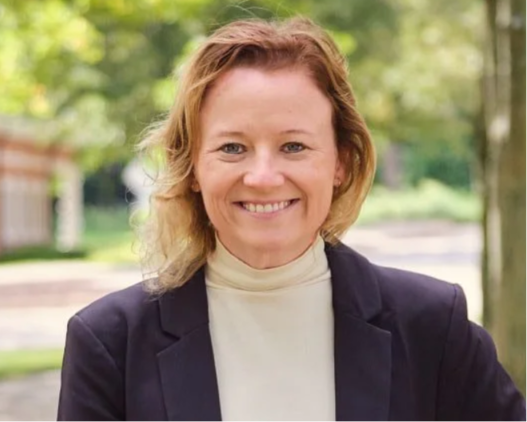
Meet Nicole Sigurdson
Nicole Sigurdson is a lifelong Ohioan, labor organizer, and Old Brooklyn resident. For the past five years she has worked as an organizer with SEIU 1199, representing healthcare and social service workers across northern Ohio. She describes growing up in the Cleveland suburbs, meeting her husband Lucas in 2020, and marrying in 2024.
She won the May 5 Democratic primary with 5,668 votes in a four-way field, beating Dionna Gore and Cheryl Perez. She carried the endorsement of the Cuyahoga County Democratic Party.
What Sigurdson says she will do
Her platform page sorts her positions into four buckets. Here’s the full list.
Economy: Stand with unions and protect collective bargaining rights. Oppose efforts that weaken worker protections. Raise wages. Defend workplace safety standards. Address the gender and racial pay gaps. Support small business growth and local economies. Protect the right of women to make their own healthcare decisions. Ensure equal access to democracy.
Education: Fully and fairly fund public schools through the Fair School Funding Plan. Provide safe classrooms, modern learning tools, and support for educators. Preserve what already works in the district’s stronger school systems. Build pathways from early childhood education through college and career readiness.
Environment: Safeguard Lake Erie from pollution and harmful algal blooms. Invest in solar and wind energy. Remove lead from older homes, schools, and buildings. Address climate change and build sustainable growth.
Additional: Protect the rights of LGBTQ+ Ohioans. Pass gun safety reforms including background checks and responsible ownership measures. Expand access to affordable housing and homeownership. Continue the fight for equity and opportunity across race, gender, and background.
Our read
Sigurdson calls herself a strong, unapologetic voice for the district. Translated, that phrase covers a platform on which almost nothing would draw an argument at a Cuyahoga County Democratic Party meeting. Fully fund schools, protect collective bargaining, defend abortion access, invest in renewables. Every Democrat in Ohio says those words. The unapologetic part would show up in the details, and the details are where this platform is light.
Sigurdson draws a paycheck as an organizer for SEIU 1199. SEIU 1199 PAC is also her single largest donor at $16,615.67, which matches Ohio’s published per-election contribution cap for legislative candidates to the penny and accounts for nearly 38 percent of everything she raised.
That relationship runs straight into the job she is seeking. District 19 is the exclusive bargaining agent for roughly 25,000 State of Ohio employees, and its 2024-2027 state contract is negotiated with the state itself.
In 2024 the union ran a public campaign telling Ohioans that “out of touch lawmakers” were failing state workers on wages and staffing. The General Assembly writes the budget that pays for those contracts. Her employer’s bargaining counterparty is the body she wants to join.
Now compare what the platform commits to against what it leaves open. She promises to stand with unions, protect collective bargaining, and oppose efforts that weaken worker protections.
Those are the positions District 19 needs from a state representative, and they cost her nothing to say. Then comes “raising wages,” with no figure attached. She told Signal Cleveland she is campaigning on increasing the minimum wage, and her own platform page never says to what number, by when, or through which bill. Ohio’s minimum wage fight has specific figures and a specific ballot history behind it, and five years into a labor career she should be the sharpest person in this race on that math.
That same lack of detail covers state worker pay, safe staffing levels, and long-term care standards, which are the issues her employer spends money campaigning on. Those workers appear in her biography. Their policy does not appear in her platform. A candidate funded by her own employer owes voters more precision on that employer’s agenda, not less.
Sigurdson has published nothing about how she would handle a vote on a contract her employer negotiated. She has not said whether she would recuse, whether she would keep the job, or whether she sees a problem at all. None of that is a hard question for a candidate who has thought about it, and none of it has an answer on her website.
Then there is the party. Sigurdson’s largest single payee was the Ohio Democratic Party’s restricted fund at $8,215.76, and she paid the Cuyahoga County Democratic Party another $3,000, which is better than a quarter of everything her campaign spent.
The Cuyahoga County party endorsed her, and her campaign moved $11,215.76 to party committees over the cycle. Common practice is not the same as clean practice, and readers of this publication have watched that particular loop tighten in race after race. The endorsement steers the primary. The primary decides the seat. The winner pays the endorser. For what, we can only speculate.
Where she does get specific, she is good, and the same standard applies in both directions. Naming the Fair School Funding Plan matters, because that is a live budget fight in Columbus with a dollar figure attached and she picked a side of it. Lead removal from older homes and schools is a concrete, measurable program. Safeguarding Lake Erie and investing in solar and wind are positions rather than plans.
The “Additional” section compresses four separate issues into one paragraph. LGBTQ+ rights, gun policy, housing, and civil rights each carry their own legislative fights in this General Assembly, and bundling them signals which four issues she expects to vote on rather than lead on.
There is also the matter of her “from the river to the sea” post on Instagram in January 2025, which she later posted a video apologizing for it. She took responsibility publicly, which counts for something in a party that usually handles these episodes by waiting them out. Voters in the district’s largest Jewish communities get to decide whether that closes it.

Meet Ed Hargate
Ed Hargate is a Cleveland-area attorney. He was born in Cleveland, raised in Highland Heights, earned a history degree from Grove City College, and graduated from Cleveland-Marshall College of Law. He has practiced civil litigation, domestic relations, and juvenile law. He joined the city council in 1984 and served four years as council president. He also led the Friends of the Mayfield Library for 25 years and served eight years as a Vice District Chairman with the Boy Scouts of America.
Two facts belong next to that record. Highland Heights voters removed him from council in November 2025, where he finished fourth of four candidates for three at-large seats with 1,087 votes, losing to first-time candidate Bill Morton after 40 years in office. He is also not the Republican who originally filed for this seat. Eric Geyer filed in February and died before the primary, and Hargate filed on April 22, less than two weeks out, then ran unopposed.
What Hargate said he would do
His campaign website lists four positions as of 2020 that have not been updated since. Here is the full list.
Protect our environment. Support Governor DeWine’s H2Ohio plan to clean and protect Ohio’s freshwater resources. Continue to emphasize zero emission solutions for energy production.
Improve education. Allow local boards of education to hire retired military and police officers to help protect students. Fight to keep locally generated tax dollars with local schools.
Encourage economic growth. Encourage students and graduates to enter skilled trade programs that develop new industries and lead to high-paying, high-skilled jobs.
Increase access to care. Create a state tax credit for people caring for elderly and special needs family members. Establish higher standards of care for nursing homes, hospitals, and rehabilitation facilities.
In 2020 he added detail that has not appeared since. He told Chagrin Valley Today he is a strong supporter of local home rule and opposed state efforts to redirect locally generated tax dollars. On vouchers, he said students should have school choice and that the state, not the local district, should pay for EdChoice.
Our read
Start with the website. The banner at the top of edhargate.com still reads “Election Day: March 17th, 2020.” The endorsement it advertises is a Plain Dealer nod from the 2020 Republican primary in the old District 6. The site has exactly one page, confirmed by its own sitemap. Voters in District 19 have no published statement from Hargate about what he would do in the 136th General Assembly, only a six-year-old brochure for a different district and a different election.
A candidate who cannot spend one afternoon changing a date and a district number is telling this district exactly just how important he thinks it is.
This is not a first-timer who doesn’t know better. Hargate spent 40 years in elected office and has practiced law for decades. He ran for a legislative seat in 2020 and put $33,205.80 behind it, so he knows precisely what a campaign requires. He is choosing not to run one. The four issues on that page were written for a district that no longer exists in that shape, and they do not mention Cleveland once, in a race where Old Brooklyn, Newburgh Heights, Cuyahoga Heights, and Brooklyn Heights are on the ballot alongside Solon and Pepper Pike.
Northeast Ohio has real business in front of the legislature while that page sits there. Voucher expansion is pulling money out of the public districts in this seat. Lead in older Cleveland housing is still poisoning children. Lake Erie water quality, utility costs, and housing prices all run through the General Assembly. Hargate is asking to vote on every one of those with a six-year-old brochure addressed to somebody else’s constituents. Voters have no indication or reason to believe he has thought about any of this since 2020.
Campaign Finance
Nicole Sigurdson
Sigurdson’s campaign raised $44,164.67 and spent $42,086.34 through the post-primary reporting period. The SEIU’s contribution of $16,615.67 is the maximum any PAC or individual may give an Ohio legislative candidate per election, according to Ballotpedia’s summary of Ohio campaign finance law.
Add the Ohio AFL-CIO at $1,000, the North Shore Federation of Labor PAC at $1,000, and the Brotherhood of Locomotive Engineers and Trainmen PAC Fund at $500, and organized labor supplied more than 43 percent of her money. She gave her own campaign $760, and her largest individual donor was Chann Fowler-Spellman at $1,000. Transparency USA logs 167 contributions and 27 expenditures for the committee.
On the spending side, after the two party committees, Public Ruckus took $4,000.01 for consulting and three printers took a combined $10,807.67. She also spent $2,075 with Cleveland Jewish Publications.
Two institutions supplied and absorbed the bulk of this campaign, and both will have business in the Ohio legislature. District 19 is entitled to hear how she plans to handle that before the vote, not after the oath.
Ed Hargate
The Friends of Ed Hargate Committee reports no contributions and no expenditures for the entire 2026 cycle, through the most recent Ohio reporting period ending June 30.
His 2020 run in District 6 took in $5,275 and spent $33,205.80, so he is running behind his own six-year-old pace in a race he has not visibly started. A campaign that raises nothing and spends nothing is not a campaign.
There is a cost to that beyond his own prospects. A Democrat who faces no funded opponent faces no pressure to explain themselves, and District 19 loses the forum, the contrast, and the questions a real race would have forced. Republicans conceding a seat is one of the quieter ways Democratic voters get handed a nominee instead of a choice.
What We Are Watching
Ohio’s pre-general reports land in late October and will show whether the Ohio Republican Party or the House Republican caucus decides this district is worth funding, and whether Sigurdson’s labor support scales up or stays where it is.
We will also be watching whether either candidate agrees to a public forum, whether Hargate publishes anything at all about this district, and whether Sigurdson puts a number next to the word “wages” before ballots are counted on November 3.
To Ed Hargate: take down the 2020 site and tell District 19 voters what you would do in Columbus.
To Nicole Sigurdson: name the minimum wage increase, publish your position on state contracts your employer negotiates, and tell this district in writing what you will do the first time District 19 and your constituents want opposite things.