

Written by guest contributor Democracy Watch . Follow their work on Substack for more analysis.
We have heard the argument. In the days since our reporting on outside spending in Ohio’s 7th Congressional District Democratic primary, some voters have pushed back with a simple point: candidates need PAC money to win. Without it they cannot compete. Without it the other side — the side with more corporate money — wins every time.
It is a real argument. And it deserves a real answer.
That answer requires understanding where PACs came from, what they were designed to do, and what they have become.
How We Got Here
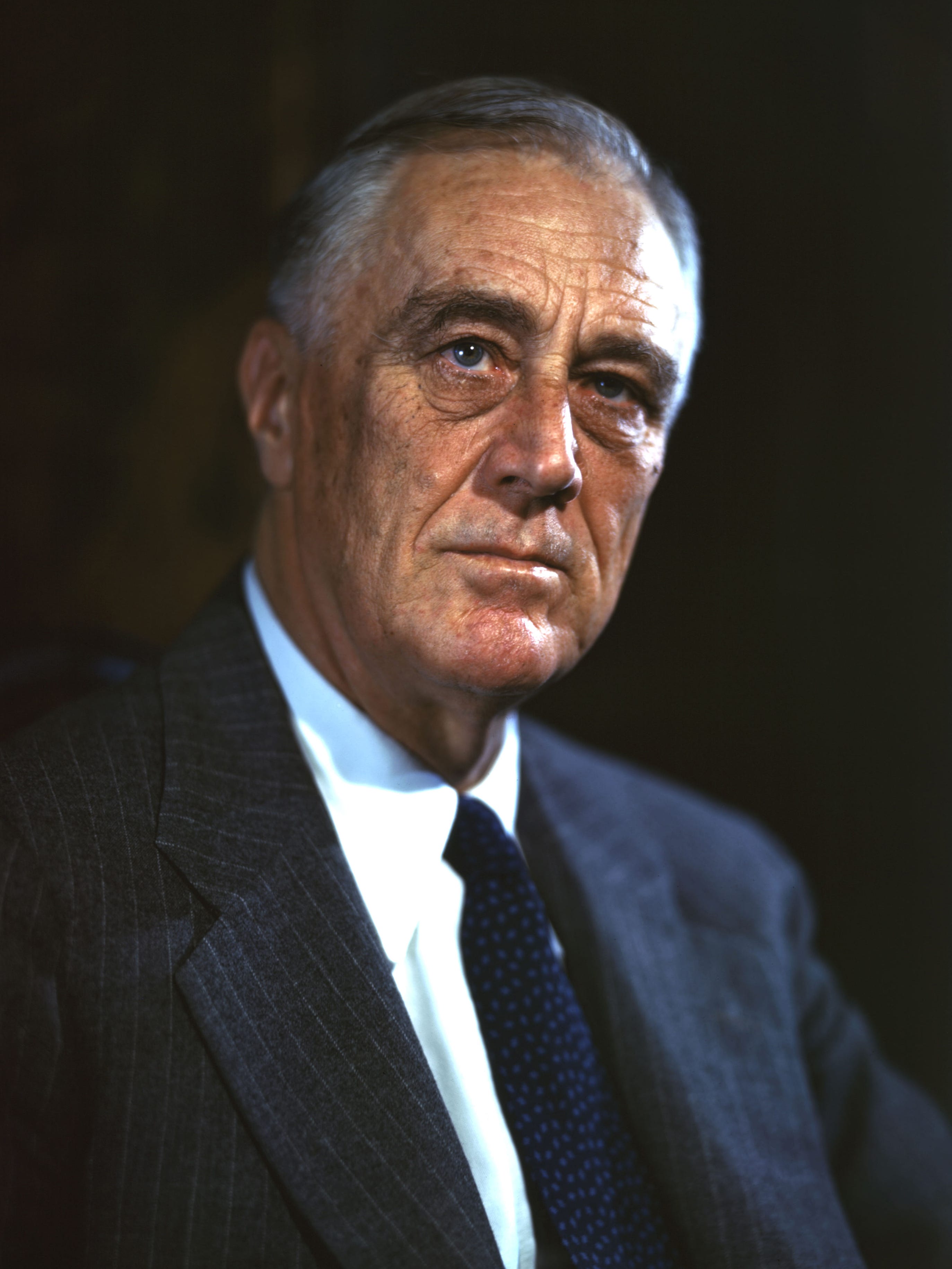
The political action committee was not invented by corporations. It was invented by labor unions. The first PAC was created by the Congress of Industrial Organizations in 1943 to support Franklin Roosevelt’s reelection — because federal law prohibited unions from contributing directly to federal campaigns. Workers pooled their own money voluntarily to support candidates who supported them. That was the original PAC — transparent, voluntary, and aligned with the people funding it.
The Federal Election Campaign Act of 1971 formalized PACs and required full disclosure. Then Watergate happened — and Congress responded with the most comprehensive campaign finance reform in American history, including strict contribution limits and the creation of the Federal Election Commission.
Then the Supreme Court dismantled it. In Buckley v. Valeo in 1976 the Court struck down expenditure limits — ruling that spending money on behalf of a candidate is a form of protected speech. You can limit how much someone gives directly to a candidate. You cannot limit how much someone spends independently to elect one.
That distinction created the gap. Citizens United in 2010 blew it wide open — allowing corporations and billionaires to spend unlimited money through super PACs as long as they don’t give directly to candidates. Outside spending jumped from 6% of total election spending in 2008 to nearly 20% by 2018. In 2016 super PACs spent more than $1 billion. By 2026 the AI industry alone has spent over $185 million on congressional races.
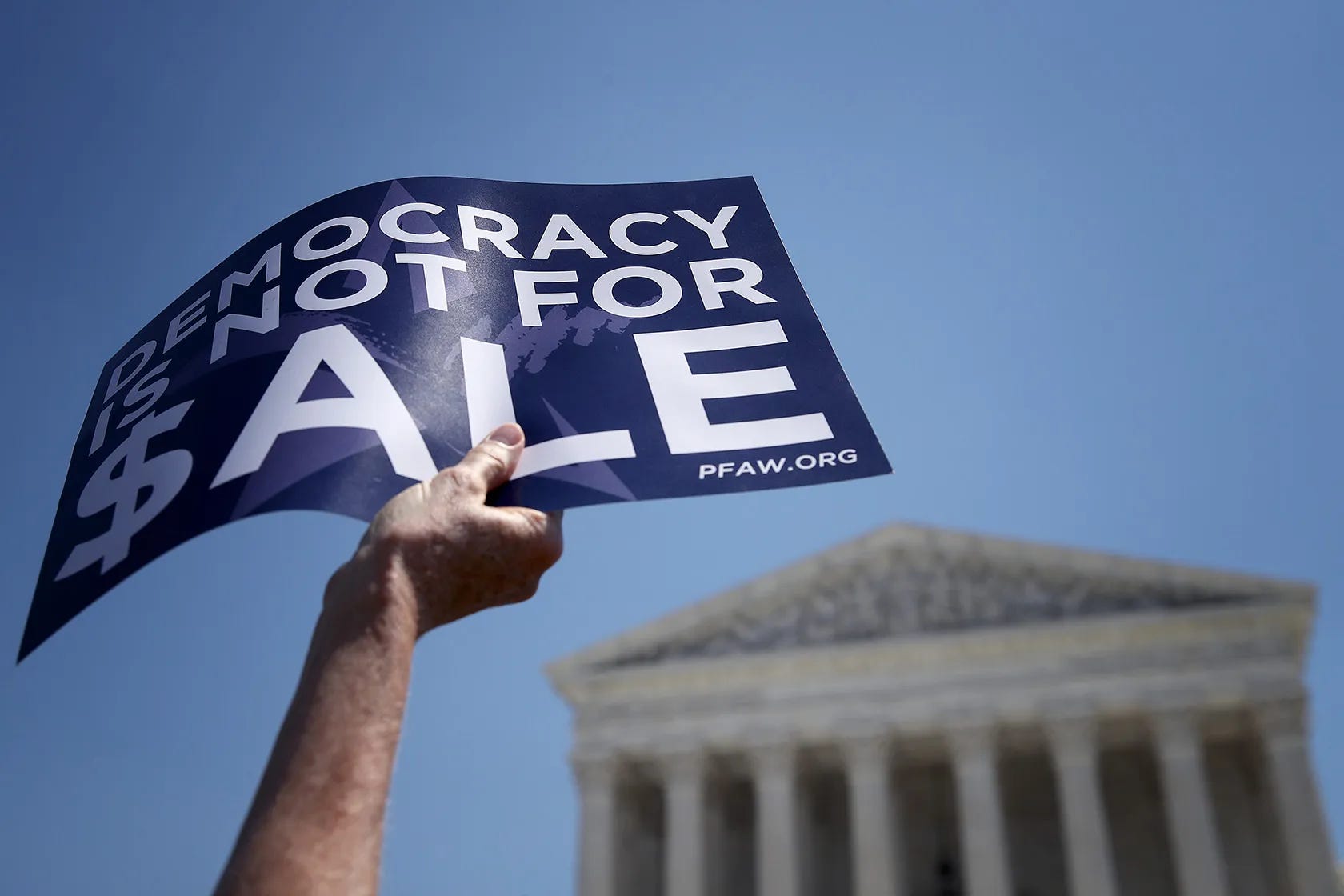
The Original PAC vs. The Super PAC
PAC: The union members who pool their dues to support a candidate who will fight for their wages — that is the original PAC. Voluntary. Transparent. Workers supporting candidates who support workers. The money and the mission aligned.
Super PAC: The $60 billion AI corporation that routes $20 million through an advocacy network into a super PAC that spends at least $158,100 on Cleveland television as issue ads to avoid FEC disclosure — that is what the PAC has become. The money and the mission are hidden from the voters the ads are designed to influence.
Why This Matters More Than Ever Right Now
The stakes of that corporate takeover have never been higher than they are today. Artificial intelligence is not a future policy debate. It is happening now — in your workplace, your hospital, your child’s school, your credit score, your healthcare coverage. The next two to five years of congressional sessions will be dominated by decisions about who is liable when AI causes harm, whether corporations can be held accountable when their systems cost people jobs or deny them care, and whether states can pass stronger protections or whether a single federal framework written by the industry itself will override them.
The AI industry knows this. That is why it has already spent $185 million on the 2026 elections — and why a $60 billion AI corporation’s political network is spending at least $158,100 on Cleveland television right now to elect a candidate in a Democratic primary who has never once mentioned artificial intelligence. The money arrived before the debate did. That is not a coincidence. That is a strategy.
Why Primaries Are Different — And More Dangerous
Here is the argument that PAC money is necessary to win — and here is why it is more complicated in a primary than in a general election.
In a general election the argument has some merit. When one side has unlimited corporate money and the other side refuses all outside spending, the side with unlimited money wins more often than not. The playing field is genuinely uneven. A candidate who unilaterally disarms in a general election against a well-funded opponent is often making a noble but losing gesture.
In a primary the dynamic is completely different — and far more dangerous for democracy.
In a primary all candidates are from the same party. The voters are the same voters. The issues are often similar. What outside corporate spending in a primary does is not level an uneven playing field. It tips a level one. It takes a race between candidates who are competing on ideas, records, and community support — and floods it with outside money that has nothing to do with any of those things. In a crowded primary field that outside money can be decisive — not because it reflects the will of the voters, but because it overwhelms them.
When a primary is flooded with outside corporate money the voters being targeted by those ads often have no idea who paid for them or why. The candidate who benefits may not fully understand what will be expected in return. The connection between the money and the outcome is invisible by design.
That is not a theoretical concern. It is the documented reality of how super PACs operate in primary elections today.
Three Examples From The Recent Record
Example 1 — Pharmaceutical Industry PACs and Drug Pricing
When Congress debated allowing Medicare to negotiate prescription drug prices directly — a policy supported by over 80% of Americans across party lines — pharmaceutical industry PACs had spent decades funding the members of the committees that oversee drug pricing legislation. The result was documented and consistent: members who received significant pharmaceutical PAC money voted against Medicare drug price negotiation at dramatically higher rates than those who did not. The constituents in virtually every congressional district in America pay for prescription drugs. The pharmaceutical industry PACs that funded those votes do not. Their interests pointed in opposite directions. The votes followed the money — not the constituents.
Example 2 — Oil and Gas PACs and Environmental Enforcement
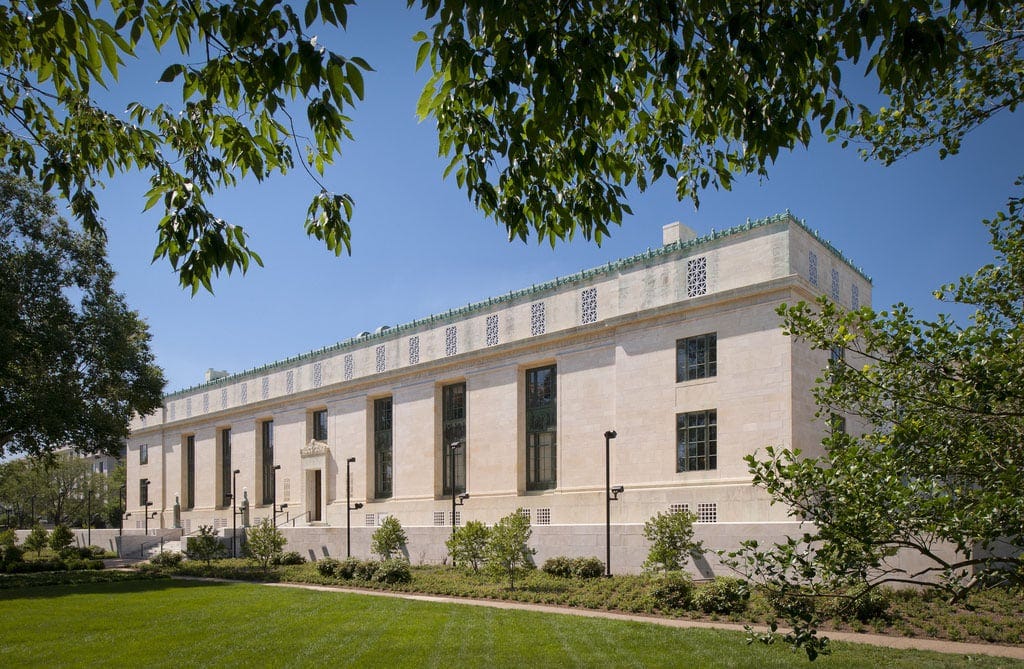
A peer-reviewed study published in the Proceedings of the National Academy of Sciences — analyzing 28 years of campaign contribution data — found consistent evidence that the more a given member of Congress votes against environmental policies, the more contributions they receive from oil and gas companies supporting their reelection. Instead of attempting to sway undecided legislators’ votes, oil and gas companies provide financial rewards to members of Congress after they have voted against legislation to protect the environment. This is not a partisan finding. It is a peer-reviewed academic study covering 28 years of data. The oil and gas industry does not live in the congressional districts it funds. The families who breathe the air and drink the water near drilling operations do. The money and the constituent interest pointed in opposite directions. The pattern held across nearly three decades.
Example 3 — Crypto PACs and the 2026 Illinois Democratic Primaries

The clearest and most recent documented case of corporate super PAC money flooding Democratic primaries comes from Illinois in March 2026. Fairshake — a crypto industry super PAC primarily funded by Coinbase, Andreessen Horowitz, and Ripple — spent nearly $20 million across multiple Illinois Democratic primaries. Its ads never mentioned cryptocurrency. Three pro-crypto candidates it supported won their primaries. All three are labeled strongly supportive of crypto on the Coinbase-backed NGO Stand With Crypto’s politician scoreboard. The crypto industry had no connection to the constituents of those Chicago-area districts. It had a direct financial interest in shaping who would vote on cryptocurrency regulation in Congress. In 2024 Fairshake supported 53 candidates who ended up in Congress — losing in just five races. Fairshake purposefully didn’t craft its political ads to reference its own aim to foster crypto — instead making ads based on whatever was the biggest political vulnerability it saw in opponents. Sound familiar?
The Math
Here is what the corporations spending money in Democratic primaries do not want you to do.
Ohio tracks party affiliation through primary voting history. Approximately 200,000 registered Democrats live in Ohio’s 7th Congressional District — voters who have pulled a Democratic primary ballot within the past two years. A competitive general election House race in a toss-up district costs between $3 million and $8 million. The median amount raised by a House incumbent in a toss-up race in 2024 was $7.9 million.
If every registered Democrat in OH-7 donated $25 — the cost of a streaming subscription — they would generate $5 million. Enough to fully fund a competitive campaign without a single dollar from a corporate PAC, a super PAC, a billionaire, or an AI corporation.
And that math only counts people in the district. Small dollar fundraising through platforms like ActBlue is national. A candidate who builds a profile by refusing corporate money can raise money from all 50 states. Congressional Democrats who rejected corporate money entirely and won their races in 2018 averaged $5.5 million in contributions — almost entirely from small dollar online donors.
The argument that Democratic candidates cannot win without corporate PAC money is not supported by the math. It is supported by a system that has convinced candidates — and voters — that the money is necessary before they even try to raise it without it.
What History Tells Us
The argument that candidates need PAC money to win is true in a system that has been deliberately designed to make it true. The more corporate money floods into elections the more every candidate feels they need corporate money to compete. The more they need it the more dependent they become on the people providing it. The more dependent they become the more the system serves those people — and the less it serves the voters who elected them.
This is not an accident. It is the predictable and documented consequence of 50 years of Supreme Court decisions that treated spending money as speech and corporations as people.
Eight sitting Democratic senators have called for their party to ban super PACs in Democratic primaries. That effort depends on candidates, journalists, and concerned voters drawing sustained attention to the role of outside spending in elections.
We pull the records. We trace the money. We report what we find. For all of Ohio.
The original PAC gave workers a voice. The super PAC took it away. That is the history. That is what is happening in OH-7 right now. And that is why it matters — not just on May 5th, but in every election that follows.
Sources
Brennan Center for Justice, January 2025: “Fifteen Years Later, Citizens United Defined the 2024 Election”
Brennan Center for Justice, January 2020: “Since Citizens United, A Decade of Super PACs”
Brennan Center for Justice: “Citizens United, Explained”
OpenSecrets: “More Money, Less Transparency: A Decade Under Citizens United”
OpenSecrets: “Money-in-Politics Timeline”
Roosevelt Institute, February 2026: “Citizens United and the Decline of US Democracy”
Center for American Progress, September 2025: “Undoing Citizens United and Reining In Super PACs”
Campaign Legal Center, January 2023: “Super PAC Deals Are A Bad Deal For Democracy”
Proceedings of the National Academy of Sciences, February 2020: “Oil and gas companies invest in legislators that vote against the environment”
CoinDesk, March 18, 2026: “Fairshake’s $10 Million Illinois Misfire”
The Intercept, February 13, 2026: “Jasmine Crockett Swears Off Corporate Cash”
Issue One, February 2025: “The 118th Congress’ Fundraising Treadmill”
Buckley v. Valeo, 424 U.S. 1 (1976)
Citizens United v. FEC, 558 U.S. 310 (2010)
Ohio Democracy Watch previous reports: ohiodemocracywatch.substack.com