

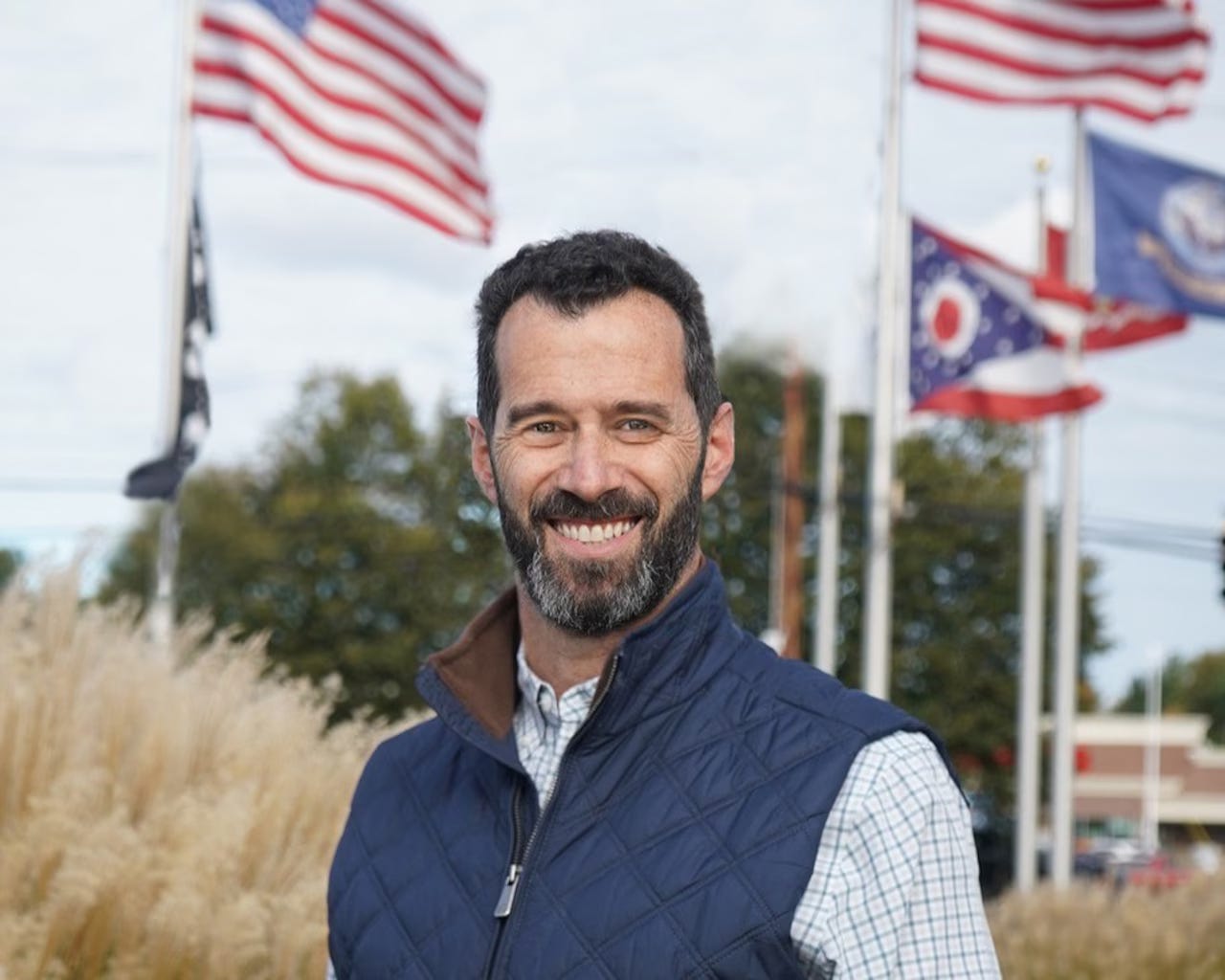
Hey everyone, this is Matt Diemer, the Angry Democrat, starting the Congressional Interview Series. We’re kicking things off with Michael Eisner, who is running for Ohio’s 7th Congressional District.
Michael Eisner is a Democratic candidate for Ohio’s 7th Congressional District and a longtime attorney who has spent more than 30 years advocating for individuals and workers. A cancer survivor and private practice lawyer, he says his experience fighting insurance companies and helping injured clients inspired him to run for Congress and push for stronger healthcare access and protections for working families.
You can learn more about him and his campaign here: https://eisnerforcongress.com/
Please see the summaries below and the timestamps that correlate with the video to find where the questions you want to hear answered appear in the conversation so you can jump directly to those sections.
Opening, Candidate Introduction, and District Background
00:00 – 04:32
I opened the interview by introducing Michael Eisner, explaining the format of the series, and letting people know the questions came from readers and voters. From there, I asked him to give his background, including where he lives, his work and education history, and whether he actually lives in Ohio’s 7th District. That led into a short discussion about gerrymandering, why district lines keep changing, and whether living in the district still matters when maps are constantly being redrawn.
Why He’s Running and What Makes Him Stand Out
04:32 – 08:04
I moved into the first batch of candidate background questions from Mary Luebke and Pam Herbert. I asked why he decided to run now, why he entered early compared to some of the other candidates, and what makes him stand out in a crowded Democratic primary. He explained his motivation for getting in, how his personal experience with cancer and healthcare shaped his decision, and why he sees himself as a political outsider running on service rather than ambition.
Healthcare Policy, Medicaid, and Universal Coverage
09:10 – 16:43
This is where I shifted into healthcare questions from Dr. Sarah Sweeney and Deb C-v. I asked what he would do to maintain Medicaid coverage for Ohioans, especially given how many people in Cuyahoga County rely on it, and whether he supports universal healthcare or healthcare for all. This section focused heavily on affordability, access, Medicaid, insurance company power, and what kind of reforms he thinks are realistic versus what works more as a slogan.
Top Priorities, Democratic Values, and Core Platform
16:58 – 25:29
Here I asked Joe Nichols’ question about his top three to five priorities and Pat Agnello’s question about whether he considers himself a Democrat and how he defines that. This section became a broad overview of what he says he is running on: healthcare, affordability, reproductive rights, due process, and a general view of Democratic politics centered around protecting ordinary people rather than powerful interests. If someone wants the biggest-picture summary of what he says he believes, this is probably the best section to hear.
Due Process, Social Media, and Legal Trouble Question
26:07 – 29:52
After he brought up due process, I followed up with a question of my own about how social media shapes guilt and innocence before any real process begins. We talked about the effect of headlines, online narratives, bots, and public opinion on justice and political reputation. I then asked Joe Nichols’ question about whether he has had any legal trouble in the last 20 years, which he answered directly before briefly expanding on integrity and accountability.
Plan to Beat Max Miller and General Election Strategy
30:50 – 37:57
This section begins with Barb Norris’s question about how he plans to beat Max Miller. I also folded in Fred Fraley’s question about how a Democrat can win in a Republican-leaning district without alienating Democratic voters, along with the broader question of how to compete for independents and voters in the rural parts of the district. This is the campaign strategy part of the interview, where he talks about turnout, district math, outreach, persuasion, and how he thinks Democrats can compete in Medina, Ashland, Wayne, and beyond.
Civil Rights, Church and State, Trump, and the SAVE Act
38:10 – 45:41
This part of the interview covers the constitutional and democratic institutions section. I asked about separation of church and state, and then followed up on where religious liberty stops if harm to others begins. From there, I moved into whether he would support impeaching President Trump and then into the SAVE Act, asking whether he supports it and why. This section is the most direct look at how he answers questions about rights, the Constitution, executive accountability, and election access.
Foreign Policy, War Powers, and U.S. Global Role
46:27 – 01:02:58
This is the longest policy-heavy section of the interview and starts when I ask him to comment on Iran, Israel-Gaza, and Ukraine-Russia. The conversation covers support for Ukraine, whether the United States should have been involved in strikes on Iran, the role of Israel in shaping U.S. foreign policy, and whether Congress has abdicated too much of its war-making authority. If someone wants to hear his worldview on foreign affairs and military engagement, this is the section to jump to.
AI Policy, Jobs, Surveillance, and Regulation
01:03:00 – 01:13:37
Here I moved into the technology and emerging tech section and asked how Congress should regulate artificial intelligence. We talked about the economic promise of AI, the likelihood of job displacement, how new technology can both eliminate and create work, and the need for policy that protects people without crushing innovation. The discussion also gets into surveillance, facial recognition, privacy, warrant requirements, military uses of AI, and why Congress needs to understand the stakes before writing laws.
Insider Stock Trading and Ethics in Congress
01:14:09 – 01:20:12
I wrapped the interview with Bill Milhoan’s question about insider stock trading and expanded it into a broader ethics discussion. I asked what he thinks about members of Congress trading stocks, what the rules should be, whether family members should also be restricted, and what the penalties should be if those rules are broken. This final section is the clearest answer on congressional ethics, financial conflicts of interest, and whether lawmakers should be allowed to profit from information they gain in office.
Stay Angry.
This outline and the timestamp summaries were generated with the assistance of ChatGPT based on the interview transcript and may condense portions of the conversation for clarity and navigation.


